
Immobilization of colloidal particles into sub-100 nm porous structures by electrophoretic methods in aqueous media Kusdianto, Sasaki, Naim, Lenggoro, Colloids Surfaces A: 10.1016/j.colsurfa.2014.06.042
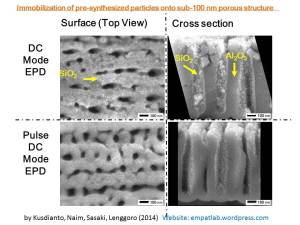
Pulse-Electrophoretic Nanopore Immobilization (PENI) Technology
What is PENI?
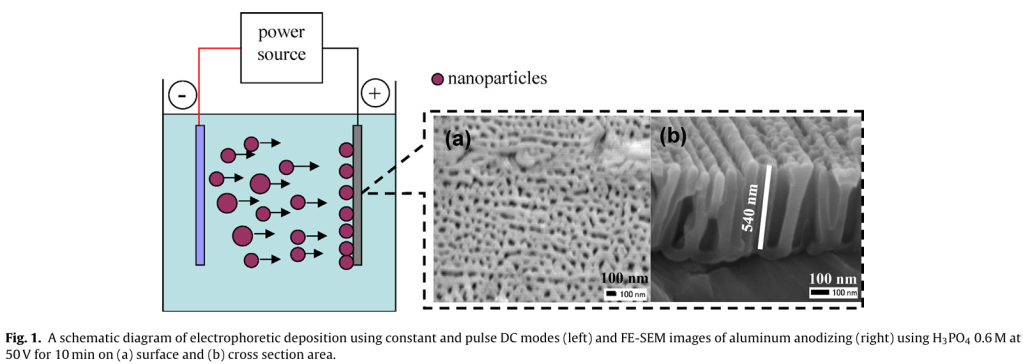
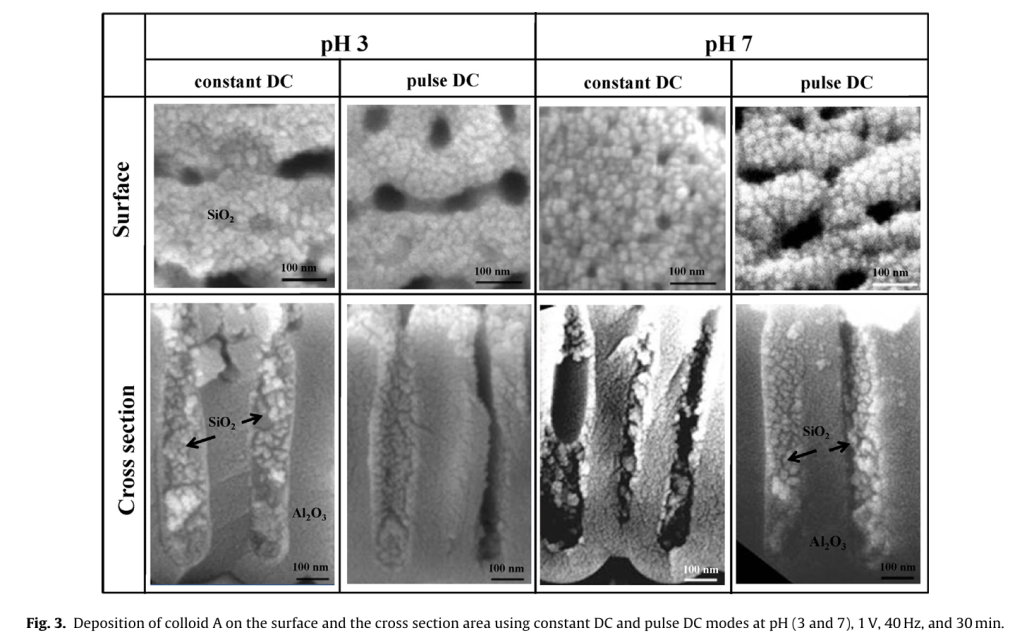
A novel technique that immobilizes pre-synthesized nanoparticles inside sub-100 nm porous structures using controlled electrophoretic deposition in water.水系媒体での電気泳動堆積を利用し、100 nm未満の多孔構造内に事前合成されたナノ粒子を固定化する革新的な技術です。
Key Features:
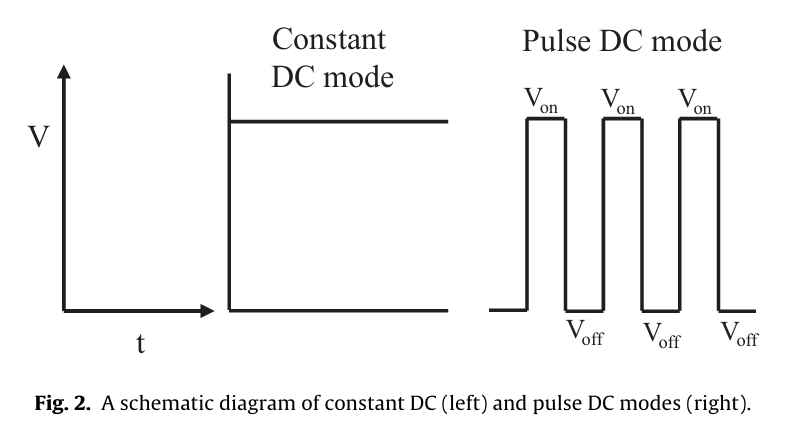
- Pulse-DC mode enhances deposition efficiency inside nanopores.パルスDCモードにより、ナノポア内部への堆積効率を向上。
- Operates at low voltage, below water decomposition threshold, minimizing side reactions.水の分解電圧以下の低電圧で動作し、副反応を最小化。
- Strong adhesion confirmed by ultrasonic detachment tests.超音波による剥離試験で強固な付着性を確認。
Why it matters:重要性:
PENI enables high-precision nanoparticle placement for advanced functional materials, catalysts, and filtration membranes. PENIは、機能性材料、触媒、フィルタ膜などの高精度なナノ粒子配置を可能にします。
Eco-friendly process: 環境に優しいプロセス:
Uses aqueous media, no harmful chemicals, and supports sustainable nanomanufacturing. 水系媒体のみを使用し、有害な化学薬品を必要とせず、持続可能なナノ製造を支援します。
>> Full article: Colloids and Surfaces A, doi.org/10.1016/j.colsurfa.2014.06.042
RELATED TECHNOLOGY: 関連技術・成果 Submicrometer- and nanometer-sized particles
- 2D structure from colloids, 電界による粒子の2次元構造化:凝集状態の制御
- Particles with high-crystallinity by-electric field in liquid-phase, 電界による高結晶粒子の構造化:クラックが少ない構造体も可能

 "Particles & Transfer" Lab. 粒子・移動現象研究室