ろうそくのすすで竹の種を守れる?
鉛ストレス下での発芽を助けるシンプルな前処理法
鉛で汚染された環境では、植物の種がうまく芽を出せず、初期成長も遅れがちです。では、もっと身近で安価な材料を使って、種の発芽を助けることはできるのでしょうか。
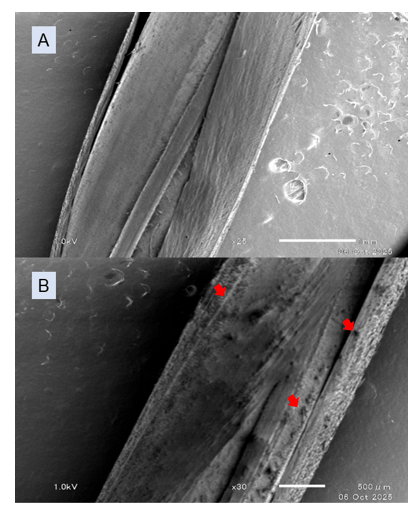
この研究では、ろうそくの燃焼で生じる炭素系すす粒子を使って、モウソウチク(Phyllostachys edulis)の種子を前処理(priming)し、鉛(Pb)ストレス下での発芽と初期成長への影響を調べました。すす粒子は平均 310 nm の流体力学径を示し、−33.5 mV のゼータ電位を持つ安定な分散系で、SEM 観察では乾燥後に凝集しながらも種皮表面へ強く付着することが確認されました。
実験では、種子を 10⁻³ wt% のすす懸濁液に 24時間 浸した後、0、100、200、400 ppm の Pb 条件で12日間発芽させました。すると、前処理した種子は、前処理していない種子に比べて、発芽率が高く、平均発芽時間が短く、苗の活力指数(SVI)と耐性指数(STI)も高いことが示されました。たとえば非前処理群では Pb 濃度上昇に伴って発芽率が 95.6% から 65.2% へ低下し、平均発芽時間は 7.25日から 9.48日 に延びましたが、前処理群ではより高い発芽率と短い発芽時間が保たれました。
(このすす粒子は、レンゴロ研究室の学生が発見し、開発した材料です)
さらに、X線蛍光分析では、すす前処理により苗への Pb 取り込みが 24–52% 低下することが分かりました。加えて、カタラーゼ(CAT)、ペルオキシダーゼ(POX)、プロリンの値が前処理群で低く、酸化ストレスが抑えられていることが示されました。電子顕微鏡(SEM)観察では種皮上に形成されたすす層が確認されており、著者らはこれが 物理的な遮蔽層であると同時に、Pb を吸着する表面として働き、吸水時の Pb の侵入を抑えたと考えています。たとえるなら、種の表面に薄い“防護膜”をつくり、有害金属の入り込みを減らしたようなイメージです。
この研究は、ろうそく由来のすすという安価で簡便な材料を使って、鉛で汚染された、あるいは劣化した環境での竹(モデル植物)の定着を助ける可能性を示しました。竹は土地回復のための植物として期待されており、本研究はその初期定着を支えるシンプルで量産化も可能な種子前処理法を示した点に意義があります。
Can soot help bamboo seeds survive lead (Pb) stress?
A simple seed-priming method for contaminated environments
Lead-contaminated environments can strongly suppress seed germination and early seedling growth. This study asked whether a simple and inexpensive material could help bamboo seeds establish under such stress.
The researchers used carbonaceous soot particles from candle combustion as a priming agent for Phyllostachys edulis seeds. The soot showed an average hydrodynamic diameter of 310.09 ± 3.22 nm and a stable zeta potential of −33.5 mV, while SEM confirmed that aggregated soot particles adhered strongly to the seed coat after drying.
Seeds were primed in a 10⁻³ wt% soot suspension for 24 h and then exposed to 0–400 ppm lead during germination. Compared with non-primed seeds, primed seeds showed higher germination percentage, shorter mean germination time, and greater seedling vigor and tolerance across Pb treatments. In non-primed seeds, germination percentage decreased from 95.6% to 65.2% as Pb concentration increased, while mean germination time rose from 7.25 to 9.48 days. These negative effects were alleviated by soot priming.
X-ray fluorescence analysis further showed that soot priming reduced Pb uptake by 24–52%. Primed seedlings also had lower catalase, peroxidase, and proline levels, indicating reduced oxidative stress. Together with the SEM observations, the authors propose that the soot layer acts as both a physical shield and a metal-adsorbing surface, limiting Pb entry during imbibition. In simple terms, the soot appears to form a thin protective layer around the seed.
This work suggests that candle-derived soot can serve as a simple, inexpensive, and scalable priming material to support bamboo establishment in Pb-contaminated or degraded environments.
Research Article
Carbonaceous soot priming shields bamboo seeds from lead toxicity by limiting lead uptake and enhancing antioxidative defense
Anca Awal Sembada ,Mohamed Syazwan Osman ,Nita Yuniati ,Susana Paulina Dewi ,Endah Sulistyawati &I. Wuled Lenggoro
Published online: 23 Apr 2026
International Journal of Phytoremediation, 1-15 (2026)
https://doi.org/10.1080/15226514.2026.2660154
IJPについて
国際植物浄化ジャーナル(IJP) は、植物システムを使用して環境問題を解決する研究に特化した初の学術誌です。土壌、水、空気の浄化、そして管理された景観における生態系サービスの復元を目的としています。

