それまで(1995〜2007年)は電子材料のプロセス研究をしていましたが、(2008~2009年)20cmから200cmまで成長する植物を対象にした装置設計は初めての経験で、研究者人生で最も悩ましい課題となりました。「とりあえず」装置を構築し、植物を育てながらデータを取得するという方法に挑戦しました。工学部と農学部の学生が共に学び、学際研究の重要性を実感できた、多くを得たプロジェクトでした。(教授)From 1995 to 2007, my research focused on processes for electronic materials. During 2008-2009, designing equipment to handle plants growing from 20 cm to 200 cm was an entirely new and challenging experience-the most difficult in my research career. We took a trial-and-error approach by first building the apparatus and then collecting data while growing plants. This project became a valuable opportunity where engineering and agricultural students learned together, confirming the importance of interdisciplinary research and gaining much from the collaboration. (Lenggoro)
◆Our Lab World’s First「世界初」技術の紹介
Highlights
- A chamber system was designed to study the interactions between submicron aerosol particles and plants. 数百ナノメーター(サブミクロン)エアロゾル粒子と植物の相互作用を研究するためにチャンバーシステムを設計した。
- Spray drying techniques were used to generate and deposit submicron aerosol particles. 噴霧乾燥法を用いて、サブミクロンのエアロゾル粒子を発生させた。
- Submicron particles from generators were deposited on model substrates of plant leaves.発生器からのサブミクロン粒子が植物の葉のモデル基板上に堆積した。
- The chamber system can be used to perform long-term exposure studies.チャンバーシステムは、長期曝露試験の実施に使用できる。
We have reported the plant-growth chamber system to study the effect of submicron aerosol particles on the growth and photosynthesis of plants. Aerosol generators were employed to realize the deposition of submicron (Black Carbon, BC) particles. The operating conditions and protocols for the exposure experiment were proposed based on the numerical simulation. Model substrates were used to examine the exposure chamber for the deposition of submicron BC particles. The BC particles were confirmed on all the substrates by FE-SEM observation and identified by Raman spectroscopy. The results of the long-term experiments showed that the BC particles were deposited onto plants with a detectable amount (Yamaguchi et al., 2012). The chamber system will allow us to study interactions between submicron aerosol particles and plants.
植物の成長と光合成に対するサブミクロンのエアロゾル粒子の影響を研究するために植物成長チャンバーシステムを報告した。エアロゾル発生器を用いてサブミクロン(ブラックカーボンBC)粒子の堆積を実現した。曝露実験の操作条件とプロトコルは数値シミュレーションに基づいて提案された。モデル基板を用いてサブミクロンBC粒子の堆積のための露光室を調べた。BC粒子はFE-SEM観察によってすべての基板上で確認され、Raman分光によって同定された。長期実験の結果、BC粒子は検出可能な量(山口ら、2012)で植物に沈着することが示された。チャンバーシステムは、サブミクロンのエアロゾル粒子と植物の相互作用を研究することを可能にするものである。
Full article free access: https://doi.org/10.1016/j.partic.2023.03.018
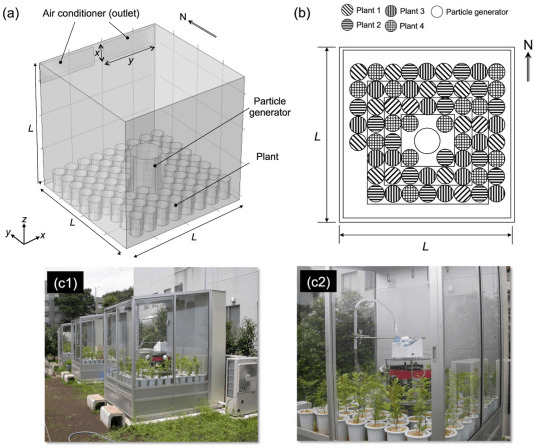
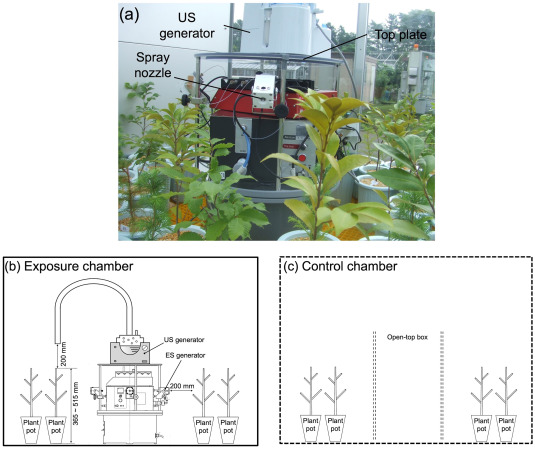
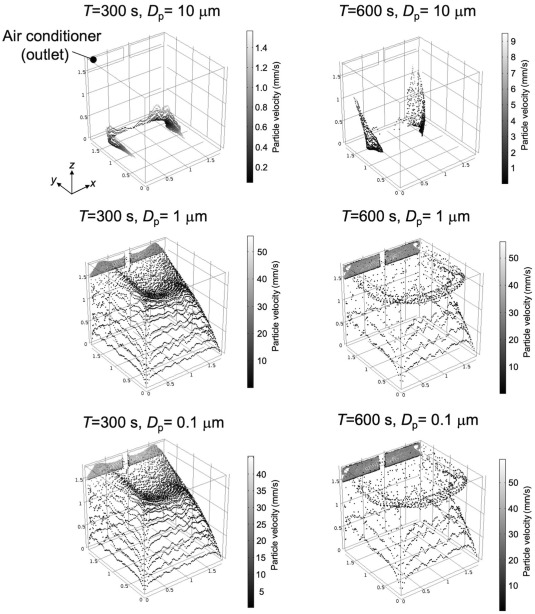
Through collaboration with multiple laboratories within the Graduate School of Agriculture, this study led to numerous related research projects, including the effects of particle exposure on plant physiology, visualization techniques for particles on leaf surfaces, and clarification of particle deposition processes in forest environments. This report is recognized as a “Mother Paper” and was selected as a Featured Article in the journal Particuology, published with waived APC (Article Processing Charges). Furthermore, it was listed among the Top 20 Most Downloaded Articles of 2023, demonstrating its strong foundational impact and widespread interest in the field. 農学研究院との連携により、多数の関連研究(植物への粒子曝露、葉面上粒子の可視化、森林での粒子沈着など)を生み出した”Mother Paper”であり、Particuology誌のFeatured Articleとして選定され、APC免除で公開された。さらに、2023年のTop 20 Most Downloaded Articleにも選ばれており、客観的にも当該分野の基盤論文として高い関心を集めている。
The related studies, for examples:
- PAPER: Spraying water-soluble particles to komatsuna leaves. 小松菜に水溶性微粒子を散布したら・・
- PAPER: Charge of particles (PM2.5) collected in filter, 捕集された大気粒子の帯電状態
- PAPER: Exposure to ammonium sulfate particles on growth and gas exchange rates of plants (2 years experiments)…植物に硫酸アンモニウムを与えていたら・・・
- PAPER. Measuring carbon particles on leaf surface,葉面上の炭素系粒子の計測手法
- PAPER. Visualization of particles on the leaves in trees, 葉面上の粒子の可視化
- PAPER. Deposition process of particles in forests, 森林への大気中微粒子の沈着過程
- PAPER. Exposure (carbon-based particles) vs. growth rates of plants, 植物成長 vs 炭素系微粒子
 "Particles & Transfer" Lab.