Faculty members in the Department of Applied Physics and Chemical Engineering can access this document in full version: //drive./ (Only some slides are shown here)
Cultivating Global Talent Through Diversity, Autonomy, and Interdisciplinary Growth: Lessons from 27 Years in Academia. 多様性、自律性、学際的成長を通じたグローバル人材の育成:27年間の大学教員生活から得た教訓
Introduction 先日、学科内セミナーにて「多様性、自律性、学際的成長を通じたグローバル人材の育成」というテーマで、これまでの研究・教育活動で得た知見をお話しする機会をいただきました。ここでは、その際にお話しした内容の一部をご紹介し、将来を担う人材育成に関する私なりの考えを共有したいと思います。I recently had the opportunity to speak at a departmental seminar on the theme of “Cultivating Global Talent Through Diversity, Autonomy, and Interdisciplinary Growth,” sharing insights gained from my career in research and education. In this post, I would like to share a part of that presentation and my personal thoughts on nurturing the talent who will shape our future.
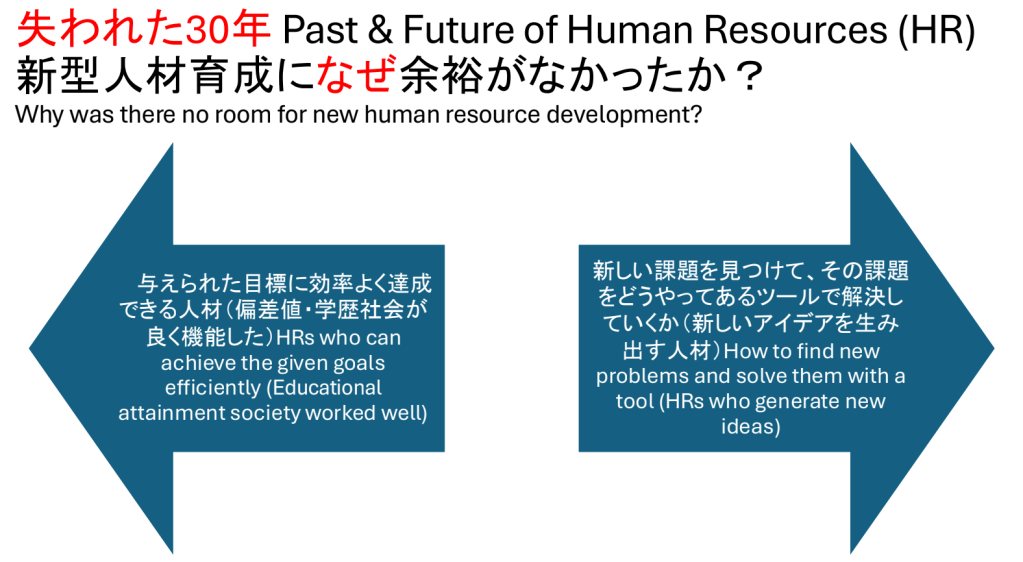
なぜ今、新しい人材育成が求められるのか:「失われた30年」からの教訓
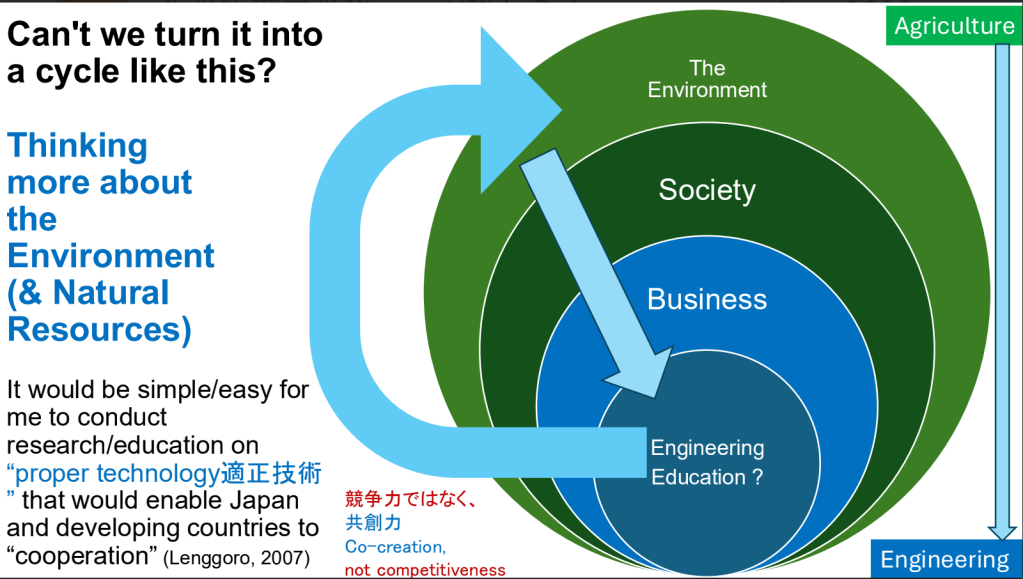
現代社会は、かつてのように与えられた目標を効率よく達成する能力だけでなく、自ら新しい課題を見つけ、革新的なアイデアで解決していく能力を持つ人材を強く求めています。この変化に対応するため、教育のあり方も進化させる必要があると考えています。
Why is New Talent Development Needed Now? Lessons from Japan’s “Lost 30 Years”
Today’s society demands talent not only capable of efficiently achieving given goals, as was valued in the past, but also possessing the ability to identify new challenges and solve them with innovative ideas. To respond to this shift, our approach to education must also evolve.
人材育成の核となる3つの柱:多様性、自律性、学際的成長
私の教育実践の核には、「多様性(Diversity)」「自律性(Autonomy)」「学際的成長(Interdisciplinary Growth)」という3つの柱があります。
The Three Pillars of Talent Cultivation: At the core of my educational practice are three pillars: Diversity, Autonomy, and Interdisciplinary Growth.
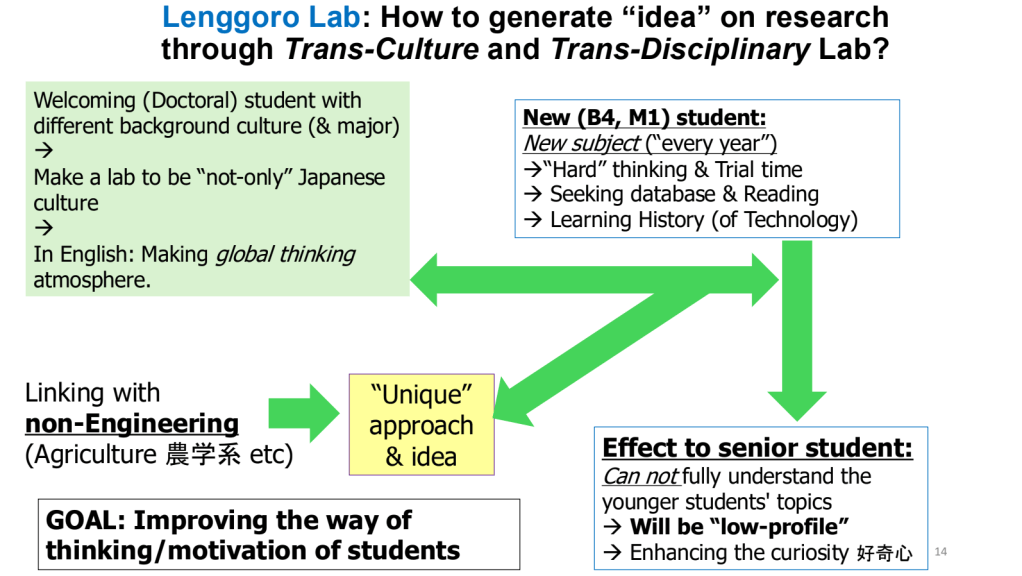
多様性の受容 (Embracing Diversity):
研究室では、国籍や専門分野の異なる学生が共に学ぶ環境を重視しています(例:80-20ルール、留学生や異分野学生の積極的受け入れ)。このような「Away-from-Home」な状況は、文化的障壁を低減し、問題設定能力を高めます。また、教員が安易に答えを提示せず、学生間の自由な質疑応答を促すことで、下級生からも活発な意見が出るようになり、学びの障壁が自然と消えていくことを経験しています。
In my lab, we prioritize an environment where students from different nationalities and fields of expertise learn together (e.g., actively accepting international students and those from different disciplines). This “away-from-home” situation lowers cultural barriers and enhances the ability to frame problems from multiple perspectives. Furthermore, by refraining from providing easy answers and instead facilitating open discussion among students, we’ve seen junior members actively contribute ideas, naturally breaking down barriers to learning.
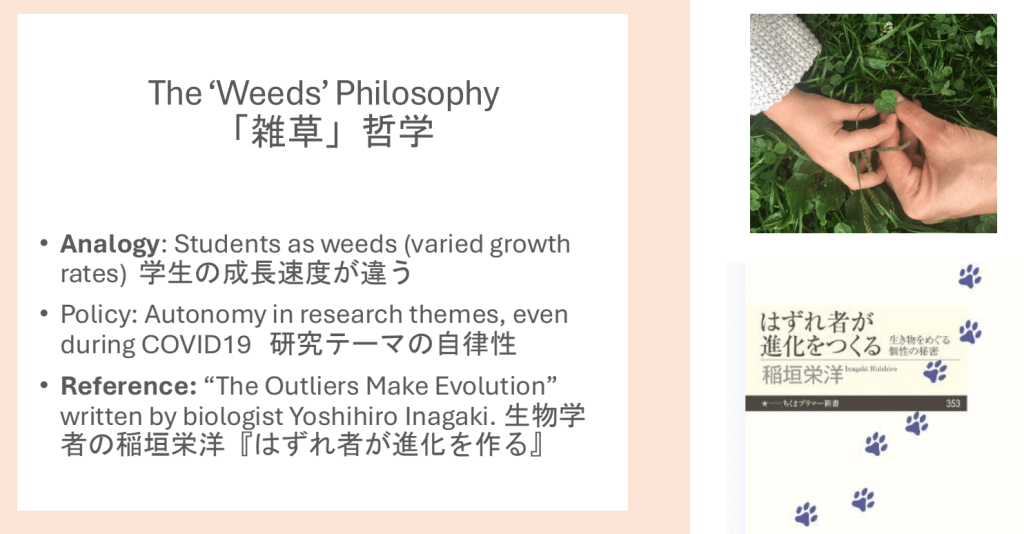
自律性と自己決定の尊重 (Fostering Autonomy & Self-Determination):
学生の成長速度は一人ひとり異なります。まるで「雑草」のように、それぞれのペースで成長することを尊重し、研究テーマの選定においても自律性を重視しています。詳細:wp.me/p10HOa-4r2
Every student’s growth rate is different. Like various “weeds” growing at their own pace, we respect each individual’s development and emphasize their autonomy, especially in selecting research themes.
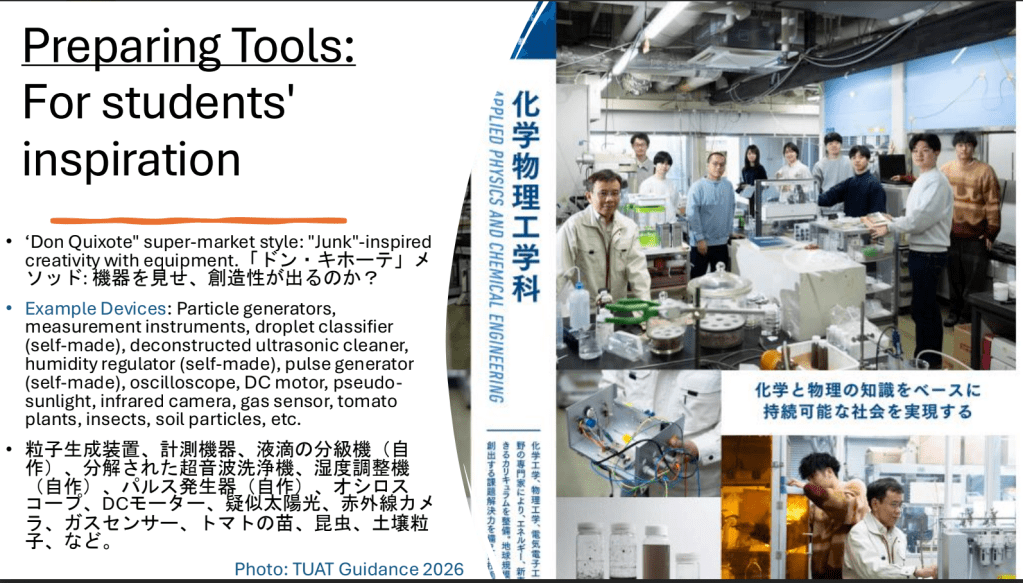
時に「ドン・キホーテ」的な、一見ガラクタに見えるような機材や環境から、学生自身の創造性が刺激されることもあります。At times, we also intentionally provide a “Don Quixote (a unique super-market in Japan)-like” environment with seemingly junk-like equipment to stimulate students’ innate creativity. You can read more about this philosophy in this related essay: wp.me/p10HOa-4r2
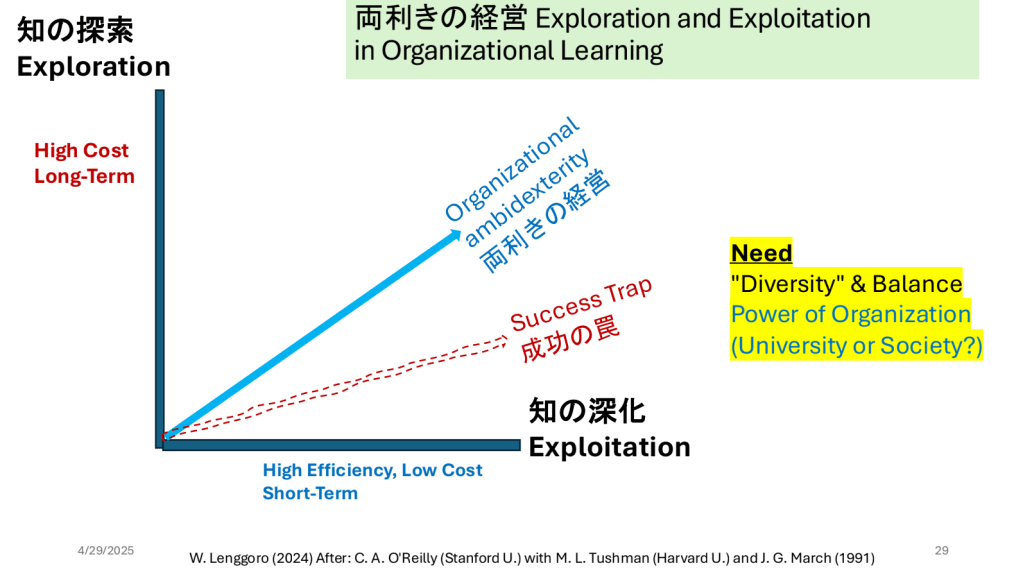
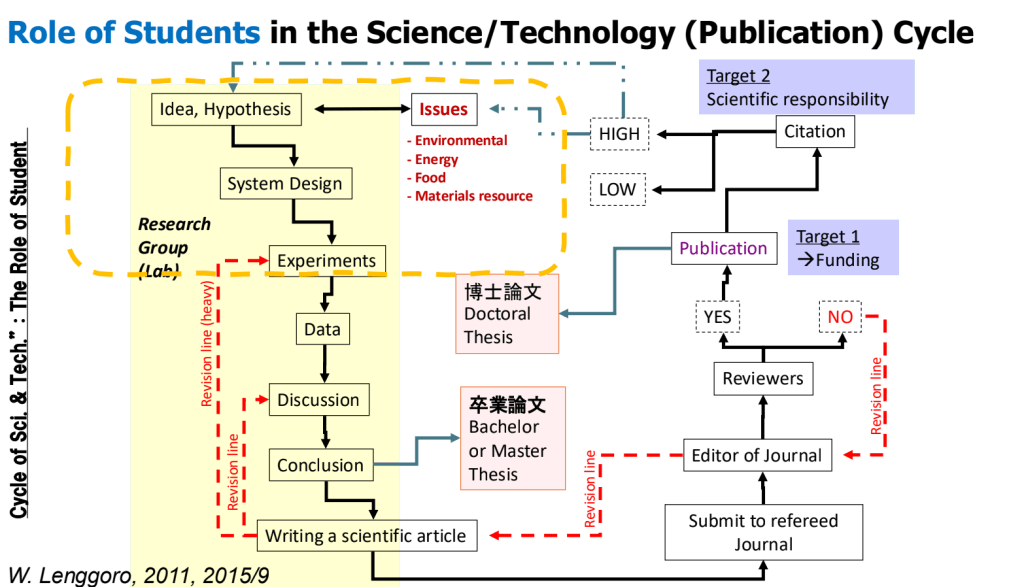
2007年に立ち上げた研究室(東京農工大学)には、これまでに50名以上の学士・修士課程と20名以上の博士後期課程学生が研究活動を行ってきました。
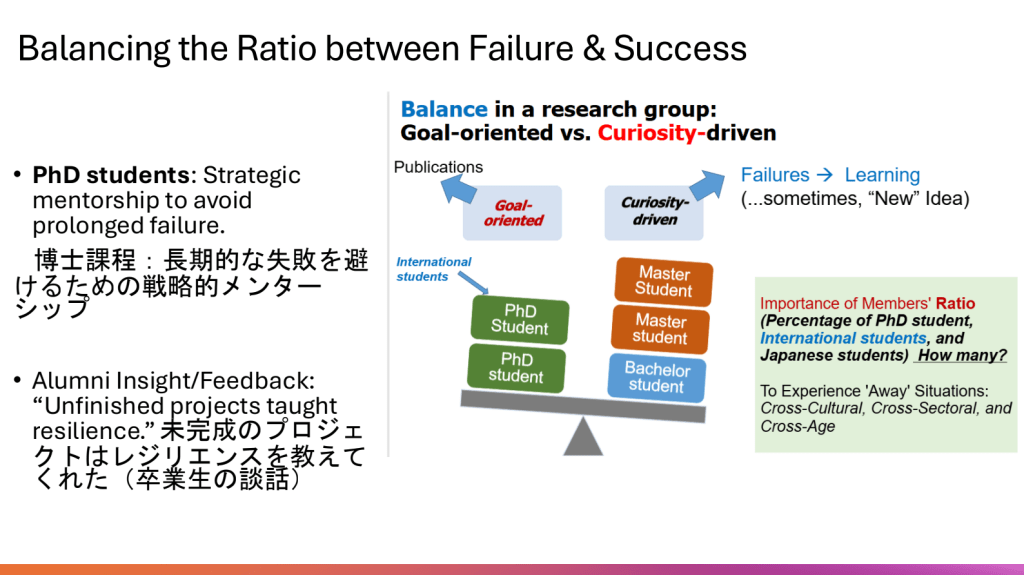
研究活動においては、目標志向と好奇心駆動のバランスが重要です。失敗から学ぶことも多く、未完成のプロジェクトがレジリエンスを育むこともあります。関連エッセー: wp.me/p10HOa-6Cf
The Underlying Philosophy of Lab Management
To support these pillars, I hold several core beliefs. First, in research, a balance between goal-oriented and curiosity-driven approaches is crucial. Learning from failure is essential, and unfinished projects can be valuable opportunities for students to cultivate resilience. Related essay: wp.me/p10HOa-6Cf
研究室運営の根底にある考え方
これらの柱を支えるため、いくつかの信念を大切にしています。まず、研究活動においては、目標志向と好奇心駆動のバランスが重要です。失敗から学ぶことも多く、未完成のプロジェクトが学生のレジリエンスを育む貴重な機会となり得ます。関連エッセー:wp.me/p10HOa-6Cf
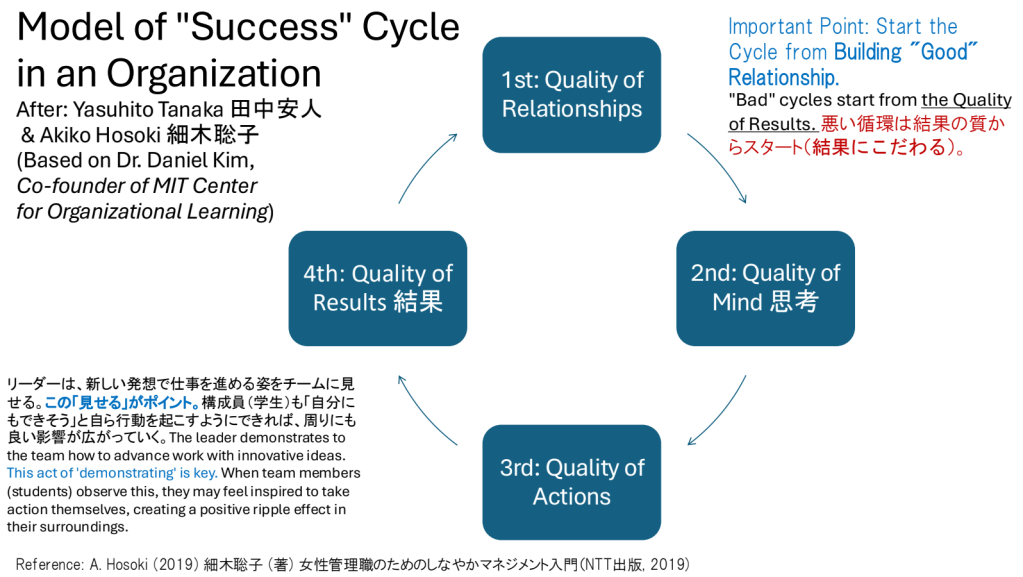
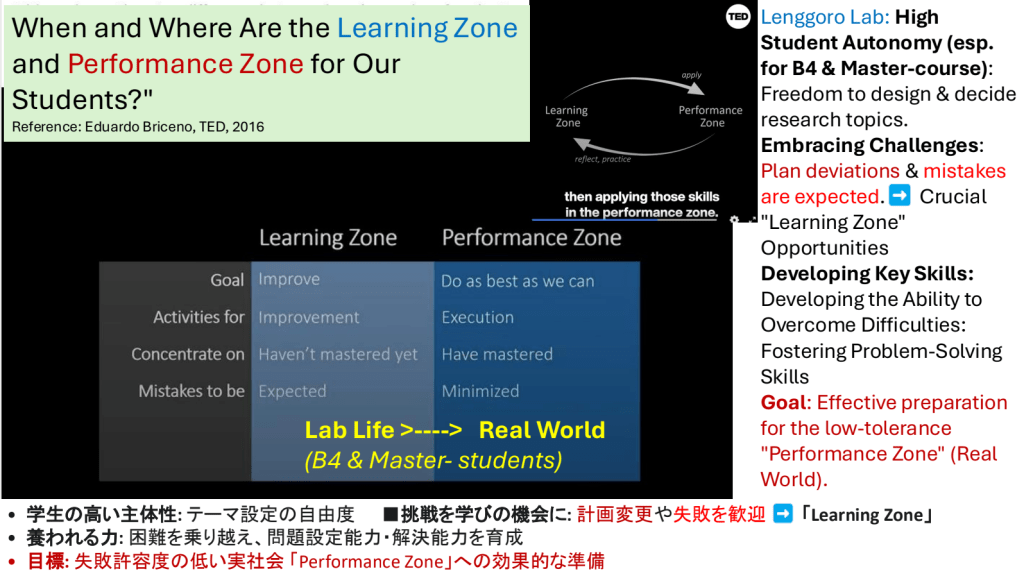
そして何よりも、「良好な人間関係の質」から始まる成功のサイクル(ダニエル・キムの組織学習モデル参照)を信じています。教員が新しい発想(組み合わせ)で楽しそうに研究に取り組む姿を見せることで、学生も自発的に行動し、周囲に良い影響が広がっていくのです。学生には「学びのゾーン」と「実践のゾーン」を意識させ、特に「学びのゾーン」では失敗を恐れずに挑戦し、困難を乗り越える力や問題解決能力を養うことを奨励しています。
The Underlying Philosophy of Lab Management
To support these pillars, I hold several core beliefs. First, in research, a balance between goal-oriented and curiosity-driven approaches is crucial. Learning from failure is essential, and unfinished projects can be valuable opportunities for students to cultivate resilience. Related essay: wp.me/p10HOa-6Cf
Above all, I believe in the cycle of success that begins with the “quality of relationships” (referencing Daniel Kim’s organizational learning model). When faculty members visibly enjoy tackling research with new ideas (combinations), students are inspired to act proactively, spreading a positive influence. We encourage students to be conscious of their “Learning Zone” and “Performance Zone,” pushing them to challenge themselves without fear of failure in the “Learning Zone” to develop resilience and problem-solving skills.
学際的成長の促進 (Promoting Interdisciplinary Growth):
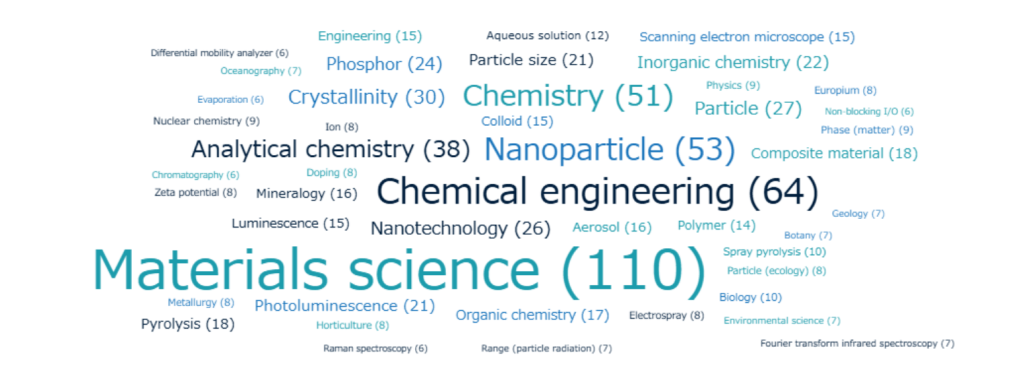
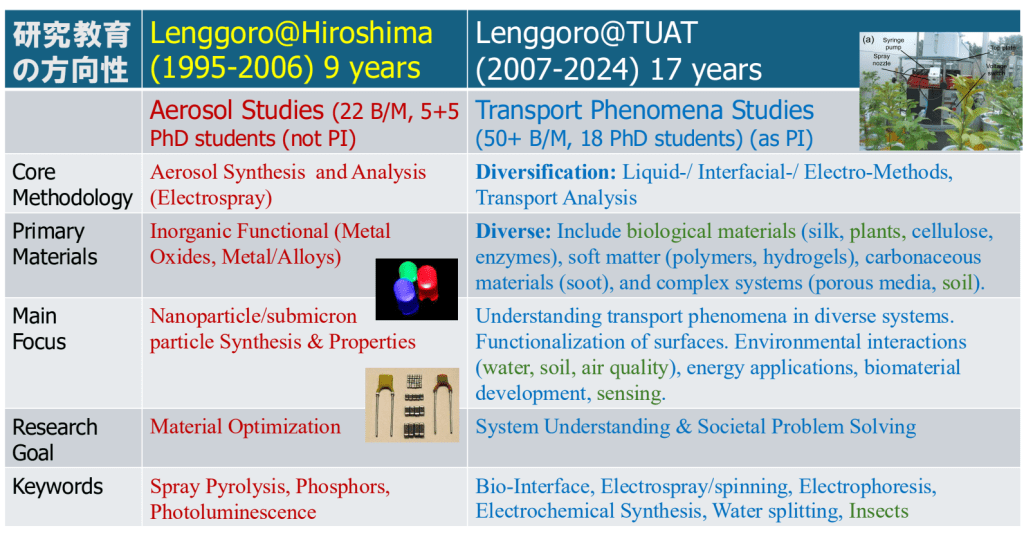
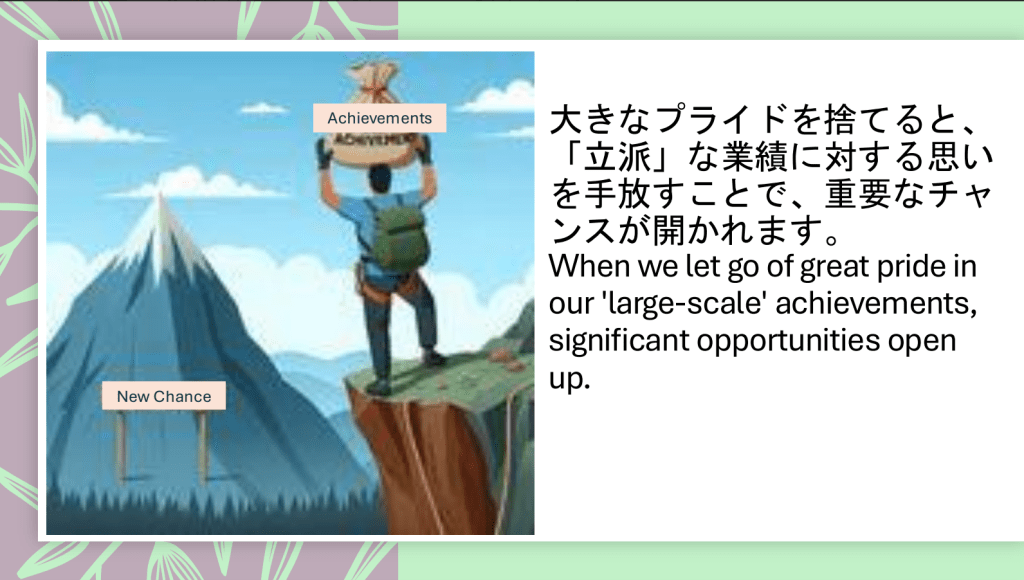
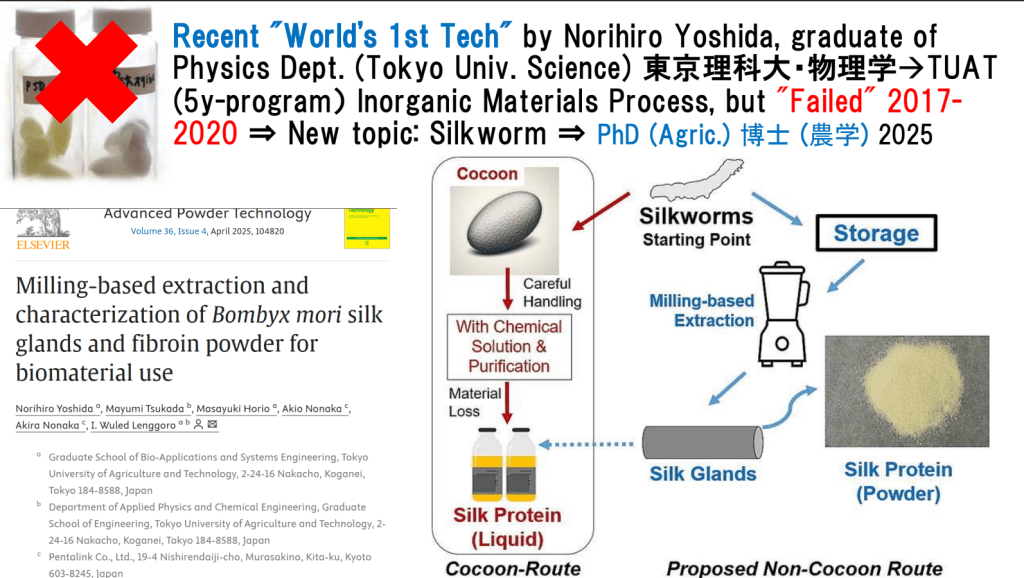
専門分野の壁を壊し、「プライドを捨てる」ことで新しい分野が開かれます。私自身も、広島大学時代は機能性材料の研究が中心でしたが、農工大に移ってからは学生の「マインドセット」を育む教育へと軸足を移し、異分野(農学分野)の研究者とも積極的に連携することで、多くの「世界初」を発見する機会に恵まれました。
New fields open up when we break down disciplinary walls and let go of our “pride.” Personally, while my research at Hiroshima University centered on functional materials, I shifted my focus to nurturing students’ mindsets after moving to TUAT. By actively collaborating with researchers in different fields (like agriculture), I have been blessed with opportunities to make numerous “world-first” discoveries.
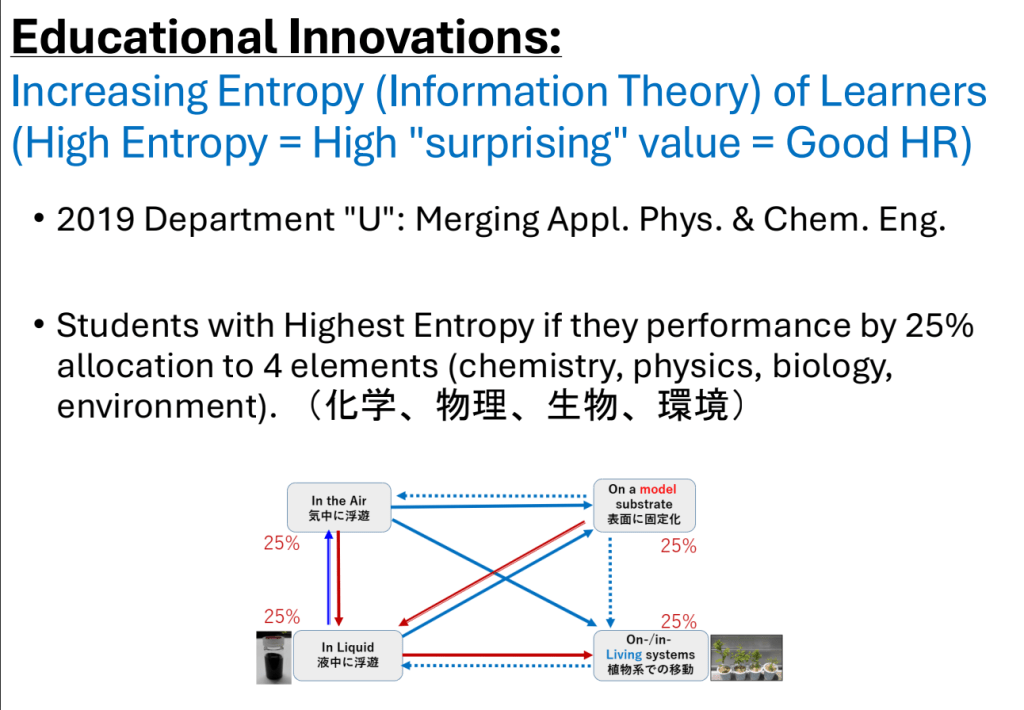
教育イノベーションとして、学習者の「情報エントロピー」を高めることを意識しています。例えば、研究室の活動において、化学・物理・生物・環境といった4要素に均等に触れる機会を提供することで、学生の思考の幅を広げ、より高い価値(驚き)を生み出す人材へと成長することを期待しています。これは、生命の基本情報であるDNAの4つの塩基(ACGT)が多様な生命を生み出すことに似ています。
グローバル人材育成の成果:「何を学ぶか」ではなく「いかに学ぶか」
最終的に重要なのは、「何を学んだか」よりも「いかに学んだか」です。研究室の卒業生たちは、多様な分野(製造業、建設業、公務員、アカデミア、起業など)で活躍しており、その就職先の標準偏差は非常に高いものとなっています。これは、テーマ設定の自由度が雇用分野の自由度に繋がっている証左だと考えています。例えば、学生時代にエアロゾルの計測を研究していた学生が、卒業後は水処理や切削工具といった全く異なる分野で活躍している事例もあります。これは、研究室で培った問題解決能力や探求する姿勢が、分野を超えて応用可能であることを示しています。
The Outcome: From “What to Learn” to “How to Learn”
Over the past 27 years, more than 70 students have graduated from my labs. Ultimately, how you learn is more important than what you learn. Our alumni are active in a wide range of fields—manufacturing, construction, civil service, academia, and entrepreneurship—and the standard deviation of their career paths is remarkably high. This demonstrates that the problem-solving skills and inquisitive mindset cultivated in the lab are transferable across disciplines.
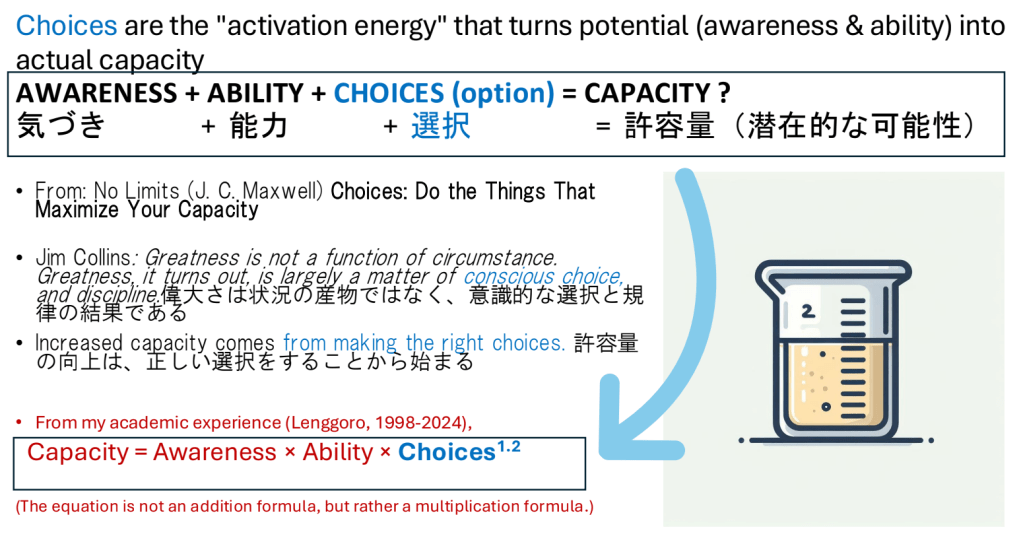
私の教育アプローチは、学生が「気づき(Awareness)」「能力(Ability)」そして「選択(Choices)」を通じて、自らの「許容量(Capacity)」を最大限に高めることを目指しています。
My educational approach aims to help students maximize their own “Capacity” through a combination of Awareness, Ability, and Choices.
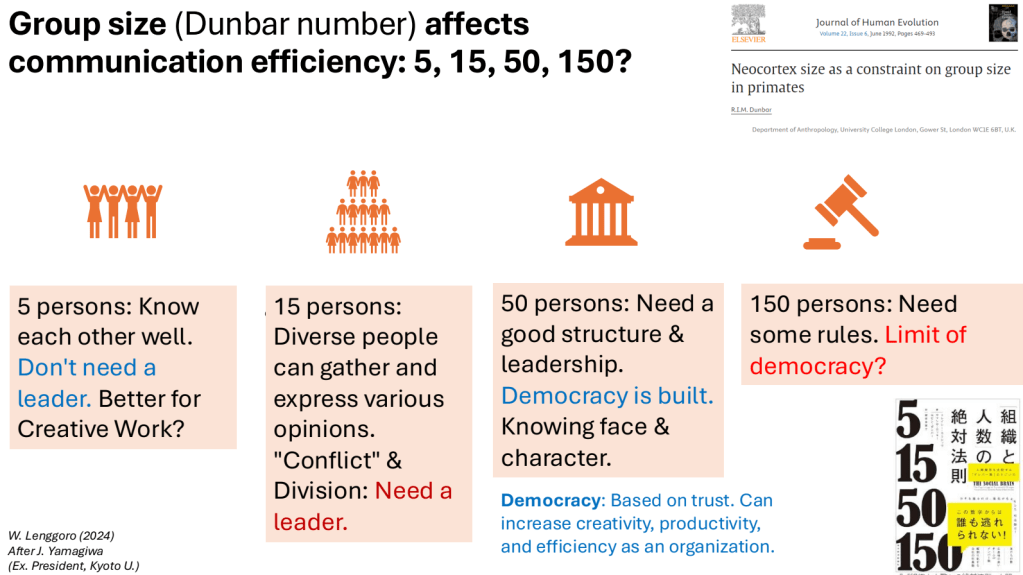
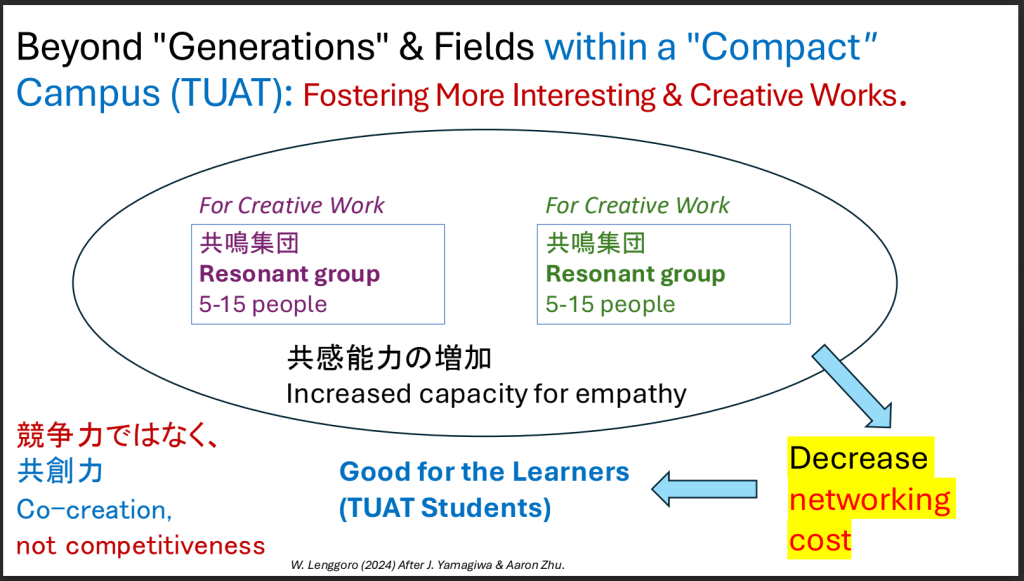
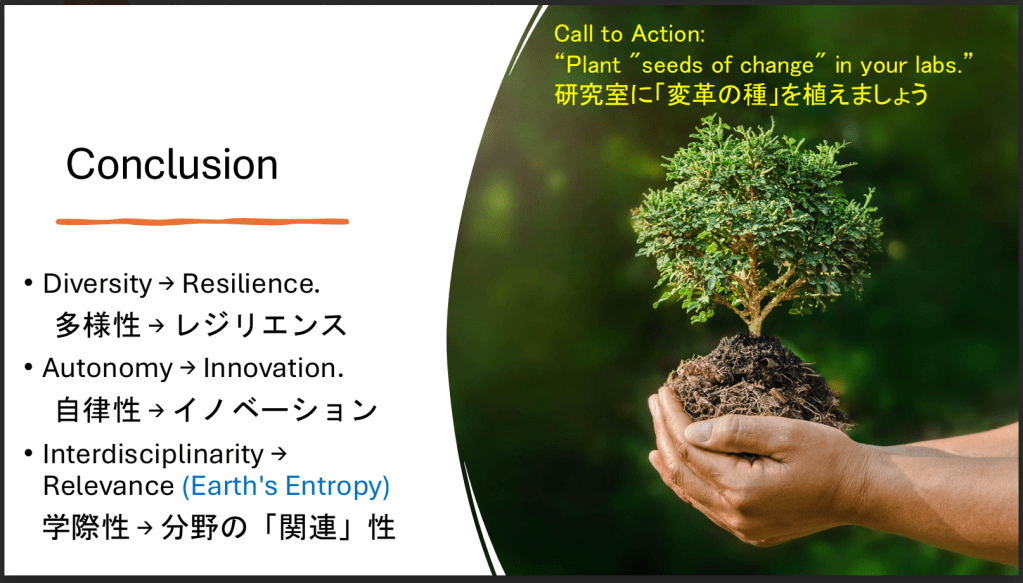
Conclusion: これからも、学生一人ひとりが持つ可能性の種を最大限に開花させられるよう、研究室という土壌に「変革の種」を植え続けていきたいと思います。
I will continue to plant these “seeds of change” in the soil of my laboratory, striving to help each and every student blossom to their fullest potential.
If you’re interested in using some slides, please let me know via MAIL @ EmpatLab.net.
 "Particles & Transfer" Lab.