English follows Japanese. A Preface for Journal of Society of Powder Technology, Japan (2024) 粉体工学会誌の巻頭言の原稿です。>> (final, pdf @ sptj.jp)
多様性と自己決定力:グローバル人材育成の道
歴史の転機に立つとき、運命を受け入れ、リスクを取る勇気が必要です。私の経験から、多様性と選択肢について学ぶことの重要性を強調したいと思います。
高校卒業後、私はインドネシア・バンドン工科大学(ITB)の物理工学科に進学しました。しかし、父の他界と公費留学の合格が重なり進路に迷いましたが、ITBを中退して留学することにしました。そして、化学工学という専攻と派遣先の国・大学が指定されました。母国で複数の言語を習得していたものの、5つ目の言語である日本語の習得に1年半を要しました。
学部生として入学した広島大学では、授業のノートが同級生にコピーされるほど、私は「日本語脳」になりました。2年次にはテレビの「戦争と平和」をテーマにした生放送の番組で議論し、その頃被爆した橋が取り壊されるニュースもあり、歴史が風化していることを痛感しました。卒業研究ではくじ引きで配属された研究室で衝撃試験機を作製し、修士論文では計算固体力学に取り組みました。粉体工学に出会ったのは、博士課程後期に進学した時でした。このように、私は異文化と異分野に触れる機会を得ました。
1997年のアジア通貨危機で、インドネシア・ルピアの価値は3カ月で3分の1になりました。このときノーベル経済学賞受賞者2名も関与する巨大ヘッジファンドが破綻し、数字と現実の人々の営みとが乖離することの怖さを学びました。博士号取得後は帰国する予定でしたが、政府機関が混乱に陥ったため、広島で研究を継続することになりました。

広島での17年間、私は海外からのゲストを広島平和記念資料館に何度も案内しました。日本の大学で開発されたアンテナ技術が原子爆弾の制御の一部に使われていたのです。技術開発において、その技術がどこに使われるかを考えることが大事だと学びました。
2006年度には日本で初めてテニュアトラック制度が導入された東京農工大学に移りました。研究室を立ち上げ、新たな方向性を模索する中で、地球規模の課題に取り組める人材の育成に注力することとしました。学生一人一人が自己決定力を磨き、広い視野を持てる場づくりに努めました。
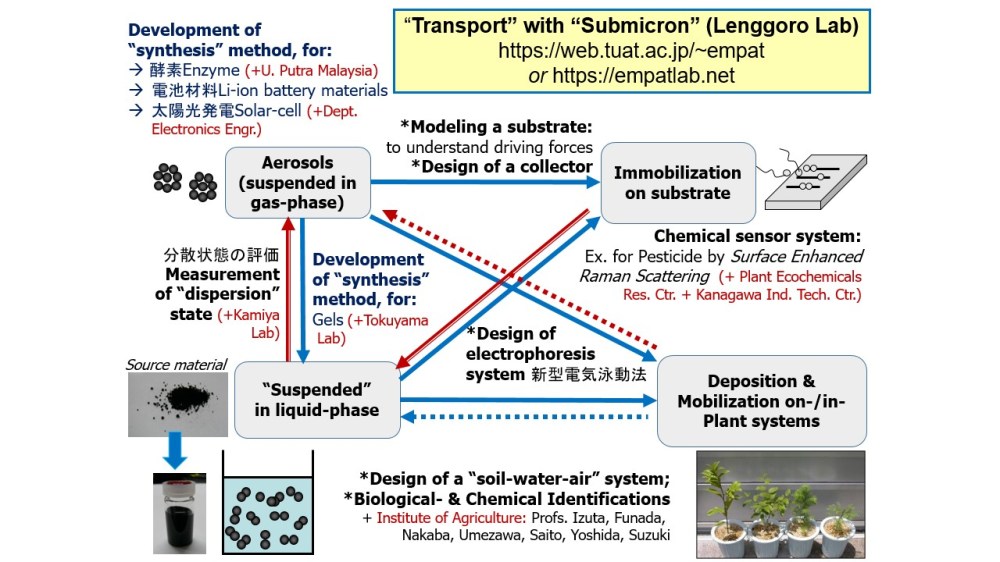
農業関連の起業家、植物学、土壌学、昆虫学などの専門家と共著論文を重ね、大学の強みを生かした環境・食料問題に取り組むプラットフォームを立ち上げ、工学教育のあり方を大学内で問う立場になりました。2019年には化学工学と物理工学を融合した化学物理工学科の設立にも関わりました。学生時代には外国出身者としてのハンディキャップを感じましたが、今では異分野への挑戦を促し、適応力を高めるうえでのメリットになっています。

研究室の学生との会話で、若者は東南アジアと日本の関係など日本史や世界史で取り上げられない国々との関係をほとんど知らないことがわかりました。歴史的にみると、西洋諸国の繁栄は海外からの資源確保に大きく依存してきました。例えば17世紀に、ジャカルタに拠点を置いたオランダの東インド会社は、日本の金属資源を求め、戦国時代の武将の対立にも関与しました。地政学的リスクの重要性や資源を巡る対立を理解しないまま国際社会に出ると交渉の場で不利になりかねません。
私の研究室では、学生自らがテーマを模索し、その方向性を主体的に説明することを重視しています。人は安心感があれば探究心を発揮できます。現在も教員は私一人であり、ファシリテーターとして学生と関わりながら、学生の失敗を奨励し、許容します。卒論と修論では装置の構築やデータ収集が失敗に終わることが多いですが、そこで生まれる学生の悔しさこそが、新たな可能性を切り拓く原動力となると確信しています。
現代社会は情報過多で、エントロピーが増大しています。大学には学生に多様な選択肢を用意し、自己決定力を養う役割があります。当研究室では、情報理論に基づき、化学、物理、生物、環境・食料の4要素を組み合わせたテーマ設定を推奨しています。各要素を25%ずつ選ぶと、エントロピーは最大(2 bit)となり、学生の思考の多様性を促進します。実際、卒業生の進路は多岐にわたります。製造業(素材、重機、半導体、自動車など)、建設業、サービス業(コンサルティング、金融など)、公的機関(消防庁、自衛隊など)を含め、50人以上の学生が50を超える多様な組織に進みました。博士後期課程の学生たちも、大学教員(マレーシア、インドネシア、日本で化学工学、生物科学・バイオテクノロジー、環境化学、食品工学、物理学の分野)、ベンチャー、自営業など、幅広いキャリアを選択しています。卒業生から「チャレンジ精神が今の自分を形成した」と言われることが、私の喜びです。
<著者紹介> 1998年、広島大学大学院博士課程修了。同大学教員などを経て、現在、東京農工大学教授、テニュアトラック推進機構長。
Other Essay/ その他のエッセー (by Lenggoro)


English version of the manuscript for the Preface to the Journal of Society of Powder Technology, Japan (2024):
Diversity and Self-Determination: The Path to Global Talent Development
At pivotal moments in history, we must accept our fate and have the courage to take risks. Based on my own experiences, I would like to emphasize the importance of learning about diversity and the power of choice.
After graduating from high school, I enrolled in the Department of Engineering Physics at the Bandung Institute of Technology (ITB) in Indonesia. However, my father’s passing and my acceptance into a government-funded scholarship program left me at a crossroads. I ultimately decided to leave ITB and pursue studies abroad, with a major (chemical engineering) and destination country (Japan) predetermined. Although I had already mastered multiple languages in my home country, it took me a year and a half to learn Japanese, my fifth language.
As an undergraduate student at Hiroshima University, I immersed myself so deeply in Japanese that my lecture notes were copied by my classmates. In my second year, I participated in a live TV debate on the theme of “War and Peace,” coinciding with the demolition of a bridge that had survived the atomic bombing. This made me acutely and painfully aware of how history was fading from memory. For my undergraduate thesis, I was assigned to a lab by lottery, where I built an impact testing machine. For my master’s thesis, I worked on computational solid mechanics. It wasn’t until I entered the doctoral program that I encountered powder technology. In this way, I had the opportunity to engage with different cultures and disciplines.
During the 1997 Asian financial crisis, the value of the Indonesian rupiah collapsed to one-third of its value in just three months. At the time, a massive hedge fund involving two Nobel laureates in economics crashed, teaching me the frightening gap between abstract numbers and the lived activities of real people. After earning my doctorate, I had planned to return to Indonesia, but due to the chaos in government institutions, I continued my research in Hiroshima.
During my 17 years in Hiroshima, I often took international guests to the Hiroshima Peace Memorial Museum. I learned that antenna technology developed at a Japanese university had been used in part of the atomic bomb’s control system. This taught me the importance of considering where and how technology might be applied when developing it.
In 2006, I moved to Tokyo University of Agriculture and Technology (TUAT), which was the first university in Japan to introduce a tenure-track system. As I established my research group and continued searching for a new direction, I decided to focus on nurturing talent capable of addressing global challenges. I worked to create an environment where each student could develop their decision-making skills and a broad perspective.
I collaborated with agricultural entrepreneurs, botanists, soil scientists, entomologists, and others to co-author papers and establish a platform for addressing environmental and food security issues, leveraging the university’s strengths. I came to occupy a position within the university where I could challenge the very nature of engineering education. In 2019, I was involved in establishing the Department of Applied Physics and Chemical Engineering, which integrates chemical and physical engineering. While I felt disadvantaged as a foreign student in the past, I now see the benefits of encouraging interdisciplinary challenges and fostering adaptability.
Through conversations with students in my group, I found that many young people are largely unaware of the connections between Southeast Asia and Japan, as well as other countries that are often overlooked in their Japanese or world history classes. Historically, the prosperity of Western nations has heavily depended on securing resources from abroad. For example, in the 17th century, the Dutch East India Company, based in Jakarta, sought Japan’s metal resources and even intervened in conflicts between Japanese warlords during the Sengoku period. Without understanding geopolitical risks and resource-related conflicts, one may find themselves at a disadvantage in international negotiations.
In my lab, I emphasize students’ ability to explore their own research themes and articulate their direction independently. People can exercise their spirit of inquiry when they feel secure. As the sole faculty member in my lab, I act as a facilitator, encouraging students to embrace and tolerate failure. Many undergraduate and master’s theses involve failed experiments in device construction or data collection, but I believe the sense of frustration and regret students feel in these moments becomes the driving force for new possibilities.
Modern society is overwhelmed with information, leading to increasing entropy. Universities have a role in providing students with diverse options and fostering their decision-making skills. In my lab, I encourage students to design research themes based on information theory, combining four elements — chemistry, physics, biology, and environmental/food science. By allocating 25% to each element, entropy is maximized (2 bits), promoting diverse thinking. Indeed, my graduates have pursued a wide range of careers, including manufacturing (materials, heavy machinery, semiconductors, automobiles), construction, services (consulting, finance), and public institutions (fire departments, the military). Over 50 students have entered more than 50 diverse organizations. Doctoral graduates have also chosen varied paths, becoming university faculty (in Malaysia, Indonesia, and Japan, in fields such as chemical engineering, bioscience/biotechnology, environmental chemistry, food engineering, and physics), entrepreneurs, and self-employed professionals. Hearing graduates say, “My spirit of challenge shaped who I am today,” is my joy.
About the Author: Prof. Wuled Lenggoro completed his doctoral studies at Hiroshima University in 1998. After serving as a faculty member there, he is now a professor at Tokyo University of Agriculture and Technology and the Director of the TUAT Tenure-Track Promotion Organization.
Short URL: https://wp.me/p10HOa-6Cf
 "Particles & Transfer" Lab. 粒子・移動現象研究室