大気汚染物質はどのように広がるのでしょうか。
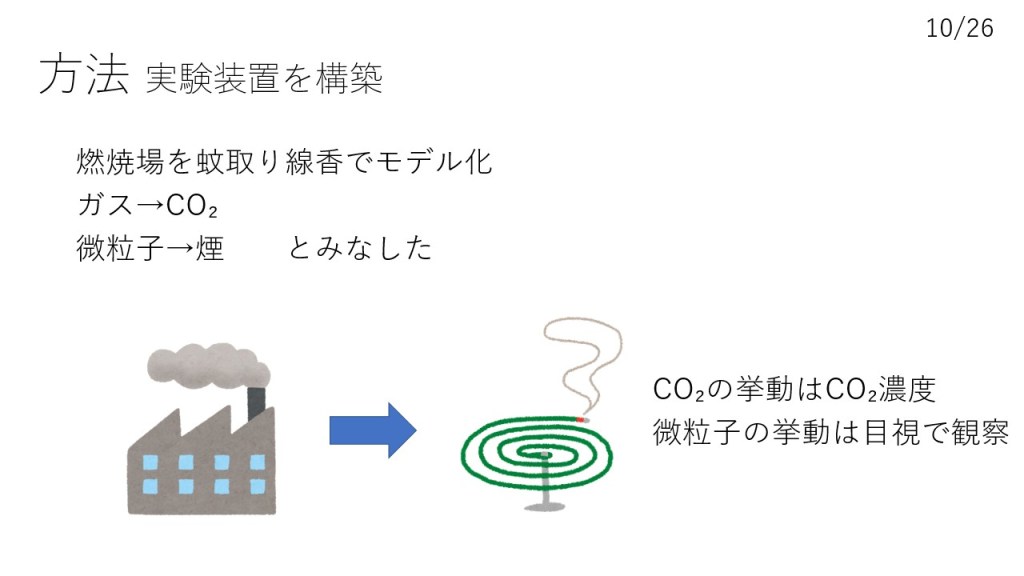
このラボローテーションプロジェクトでは、学部2年生が蚊取り線香を用いて、小規模な燃焼場における二酸化炭素(CO₂)ガスとエアロゾル粒子の挙動を観察しました。
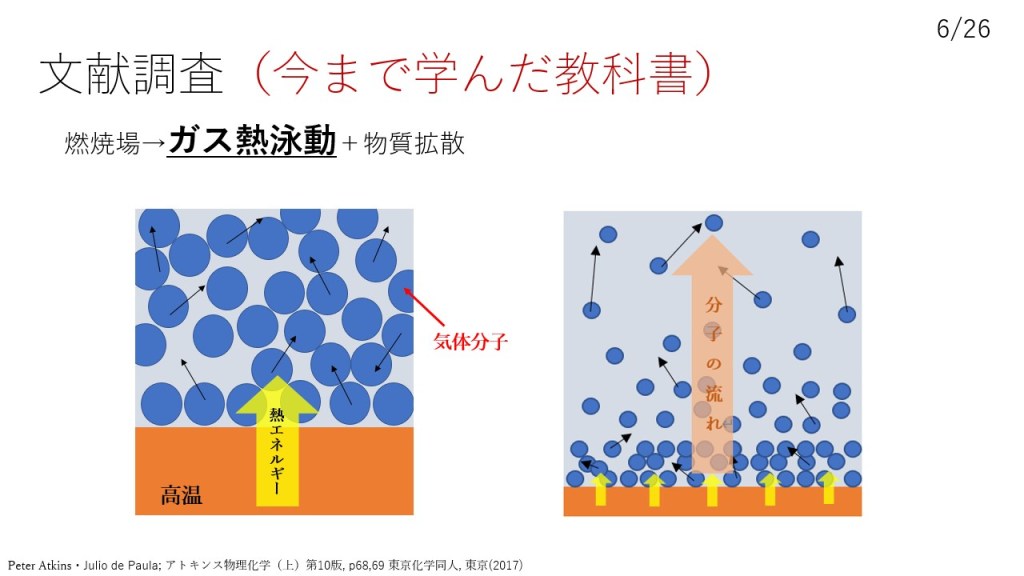
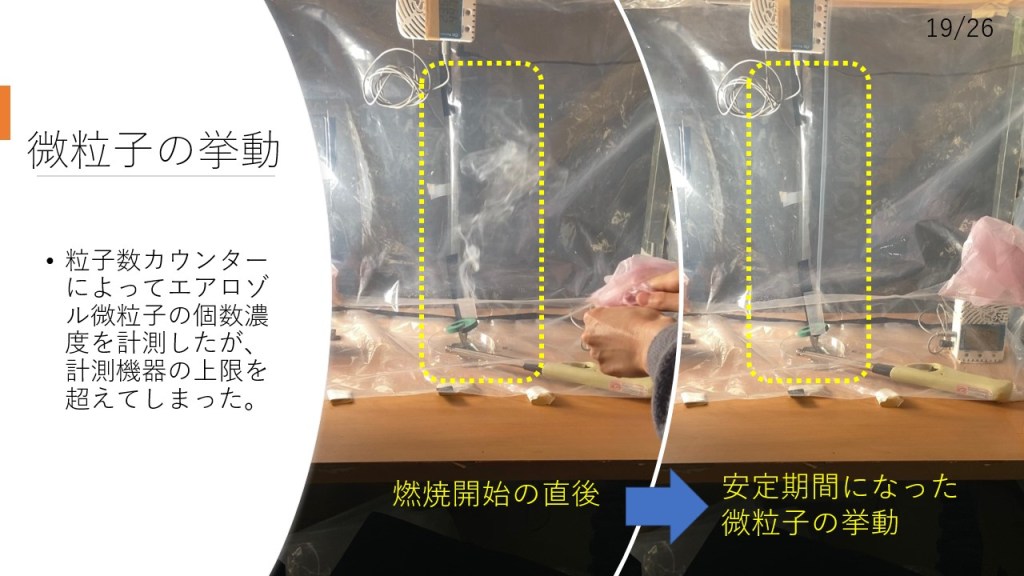
燃焼によって発生した熱は気体分子の運動を活発化させ、上昇気流を生み出します。一方、CO₂は濃度差によって拡散し、煙を構成する微粒子は空気の流れに伴って移動します。
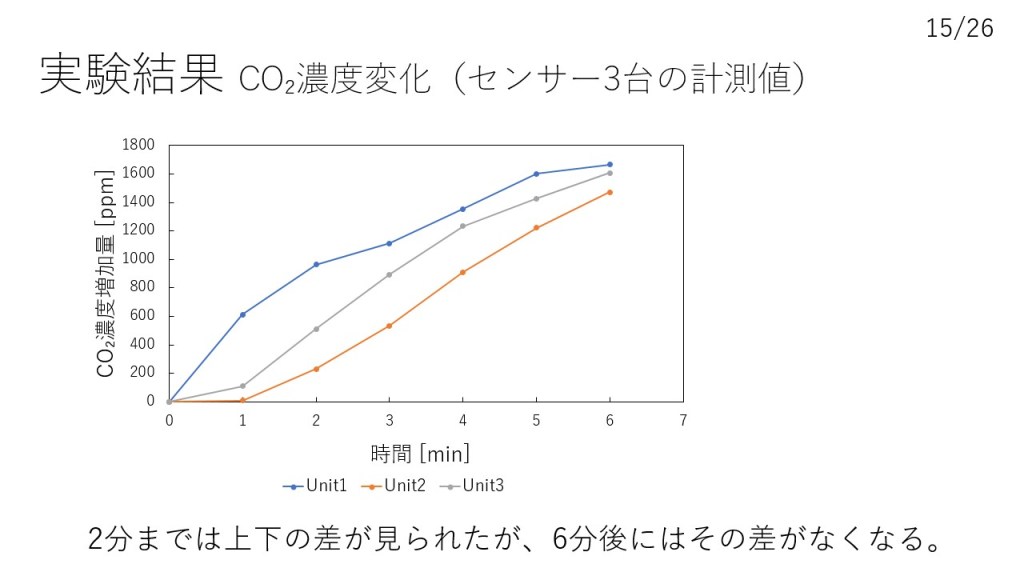
CO₂濃度、温度、煙の挙動を同時に観察した結果、
- ガスは拡散しながら空間全体へ広がる
- 熱によって上昇流が形成される
- 微粒子は空気の流れによって運ばれる
という基本的な輸送現象を可視化することができました。
この実験は、燃焼場という小さな系から、大気汚染やエアロゾル輸送といった地球規模の問題を考えるきっかけとなりました。
ラボローテーション活動報告 Lab-Rotation Activities: Report (by H. Jojima, 2nd year student)
燃焼場で起こるガスと微粒子の輸送を理解すると大気汚染が見える (Gas and particle transport in combustion sites: a window to understand air pollution transport)
How do air pollutants spread through the atmosphere?
In this lab-rotation project, a second-year undergraduate student used a burning mosquito coil as a simple combustion model to investigate the behavior of carbon dioxide (CO₂) gas and aerosol particles.
Combustion generates heat, which increases molecular motion and creates upward airflow. At the same time, CO₂ spreads through diffusion, while aerosol particles are transported by surrounding air currents.
By measuring CO₂ concentration, temperature, and the visible movement of smoke, the study illustrated several fundamental transport phenomena:
- gases spread through diffusion,
- heat generates upward flow,
- particles are transported by air movement.
The project demonstrated how a simple tabletop experiment can help us think about larger environmental issues, including air pollution transport and aerosol behavior in the atmosphere.
What the Student Learned
このプロジェクトでは実験だけでなく、
- テーマ設定
- 文献調査
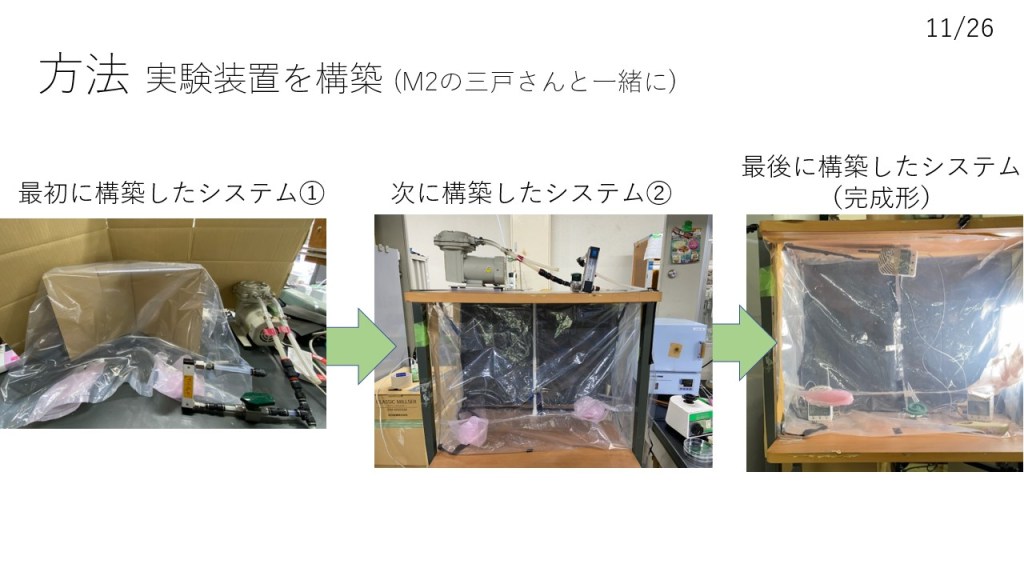
- 実験装置の設計
- 計測機器の校正
- データ解釈
という研究活動の一連の流れを体験しました。
特に、
「目に見えないガスの挙動を、目に見える現象から理解する」
という研究的な考え方を学ぶことができました。
Beyond the experiment itself, the student experienced the complete research process:
- defining a research question,
- reviewing literature,
- building an experimental setup,
- calibrating instruments,
- and interpreting data.
One important lesson was learning how
visible phenomena can be used to understand invisible transport processes.
This is one of the central ideas in transport phenomena and environmental engineering.
Please find below the slide deck that was presented for this project. 本プロジェクトのプレゼンテーションで使用したスライド資料を、以下にご案内いたします。
燃焼システム中の二酸化炭素ガスとエアロゾル粒子の輸送. The transports of CO2 gas and aerosol particles during a combustion system









Student Reflection/ 学生の感想
今回のラボローテーションでは、自分でデータを取得しながら、拡散現象や熱による気体の運動について理解を深めることができました。また、大気汚染やウイルス感染対策といった身近な社会課題を、移動現象の視点から考える貴重な機会となりました。
さらに、テーマ設定、文献調査、実験装置の構築、計測機器の校正、データ解析まで、研究活動の一連の流れを実際に経験することができました。講義だけでは得られない学びが多く、研究の進め方を体験的に理解することができました。
レンゴロ研究室の先輩方(三戸さん(M1)、市川さん(B4))から多くの助言と支援をいただき、大変有意義な経験となりました。
Through this lab-rotation project, I learned about diffusion and thermally driven gas motion by collecting and analyzing experimental data myself. The project also provided an opportunity to think about real-world issues such as air pollution and airborne disease transmission from the perspective of transport phenomena.
In addition to conducting experiments, I experienced the entire research process, including defining a topic, reviewing literature, building an experimental setup, calibrating instruments, and interpreting data. These experiences provided insights that cannot be obtained from classroom lectures alone.
I am grateful to the members of the Lenggoro Lab (Mr. Miyoshi (M1) and Ms. Ichikawa (B4) for their guidance and support throughout the project.

