下記スライドをみて、農学部・T.S.教員からのコメント:良い取り組みですね!耕作可能面積、連作障害、燃料・原料(農薬、農業機械、漁船)、漁獲量(4分の1は養殖なので、その飼料原料:魚粉)、農業・漁業従事者、文化・教育など、このあたりも物質循環の観点から今後ご検討いただけると、実態に近付くように思いました。
Freshman project class. 化学物理工学科1年生プロジェクト。
毎日、芋と魚を食べれば輸入品(肥料や飼料等)に頼らずに済むが、If people (in Japan) ate potatoes and fish every day, they would not have to rely on imported goods (fertilisers, feed, etc.), but…. ?
下記は最終発表のスライドです。2022年度
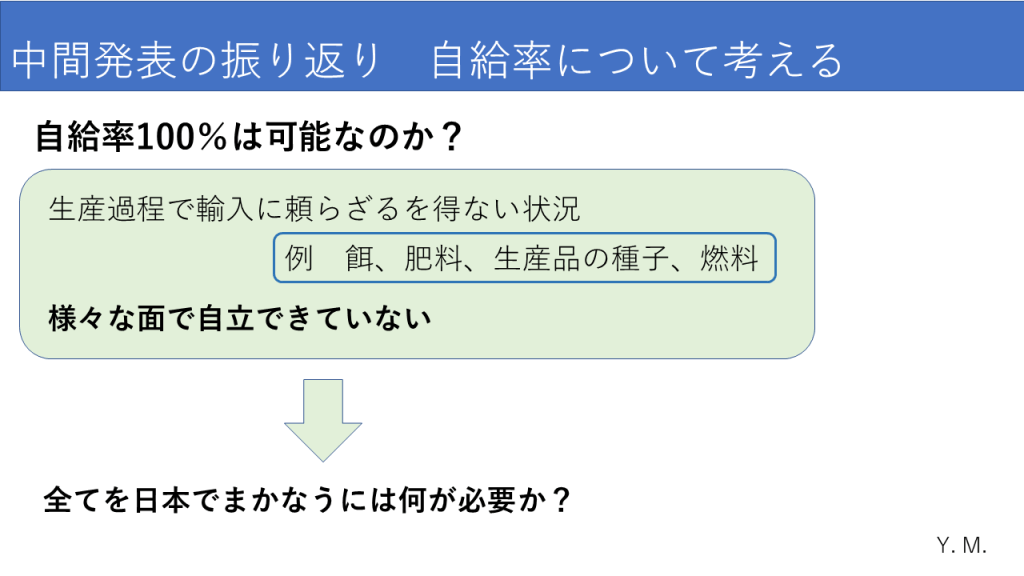
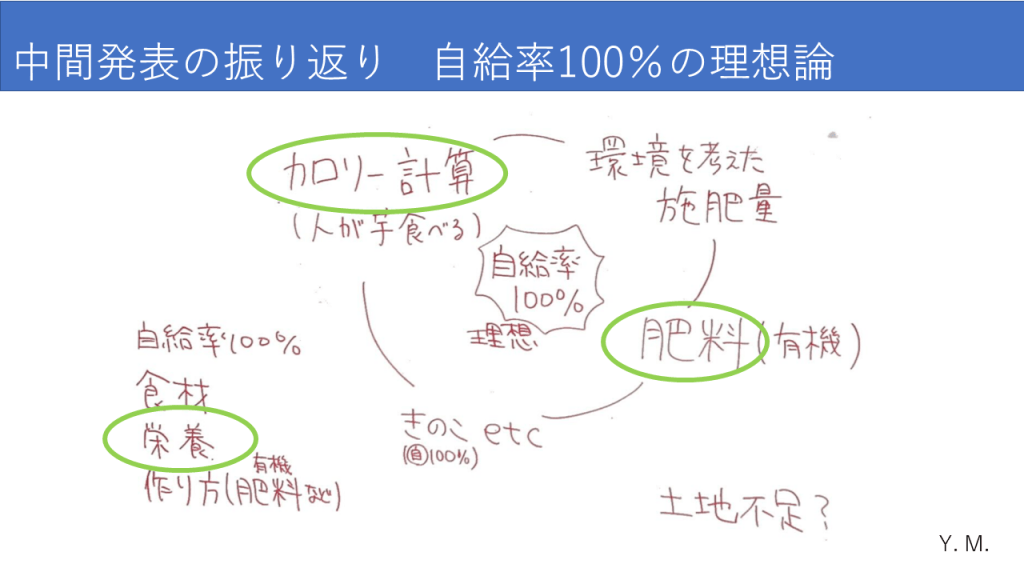
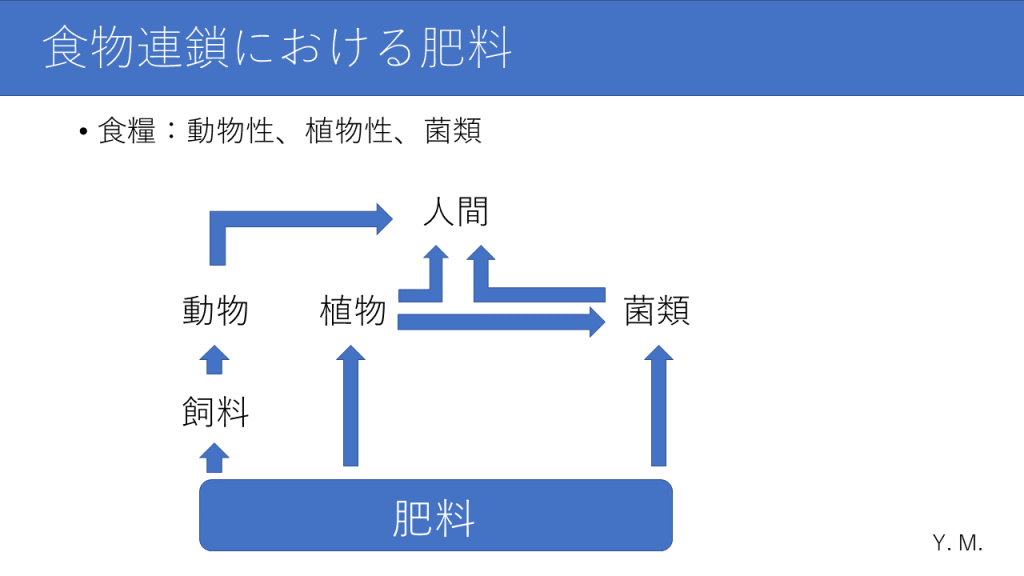
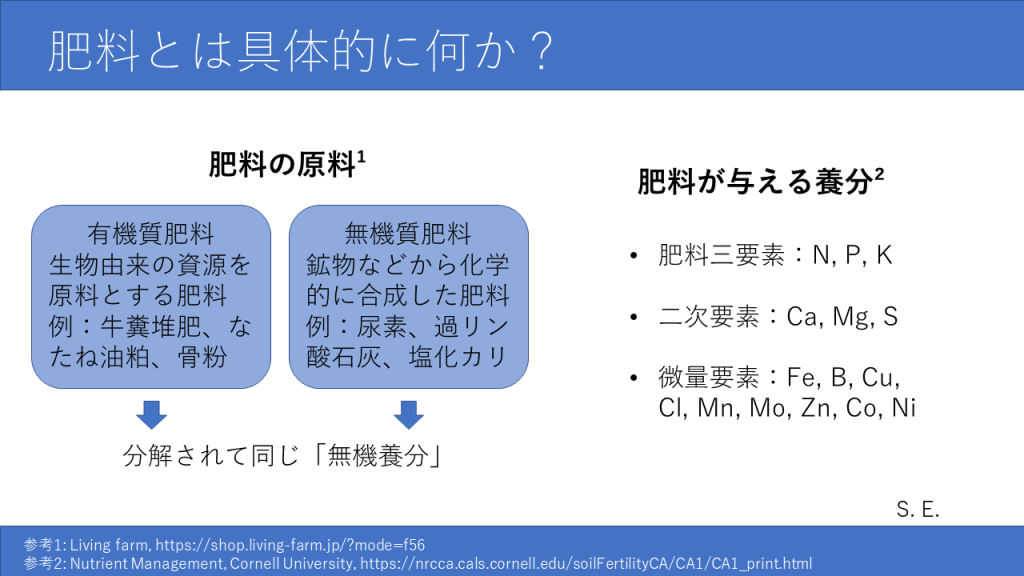
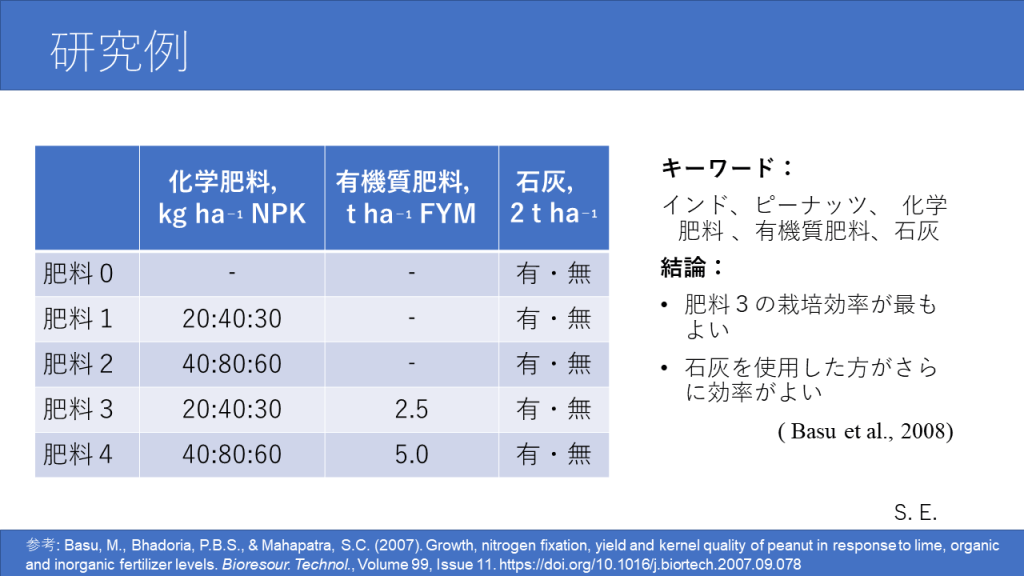
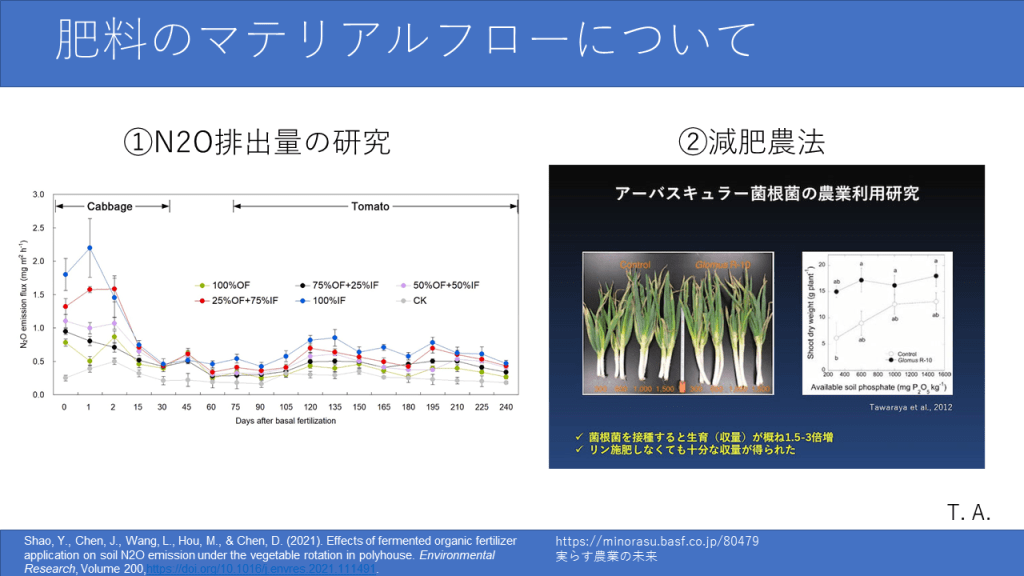

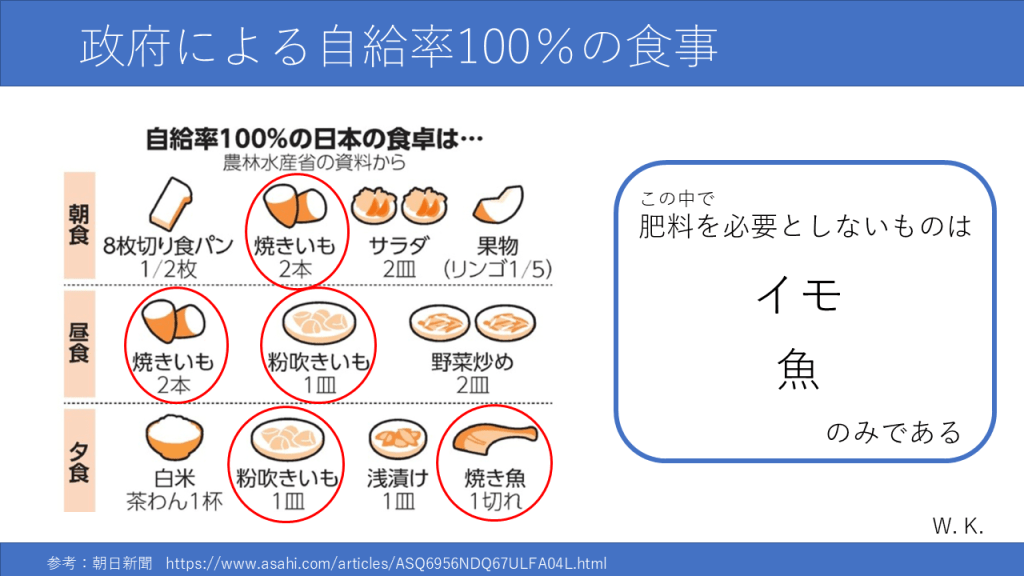
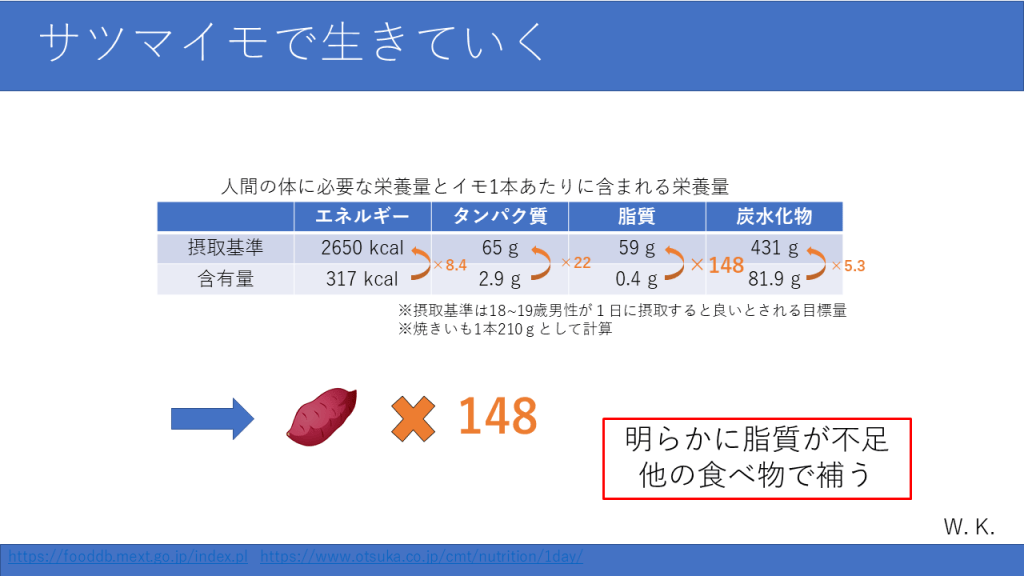
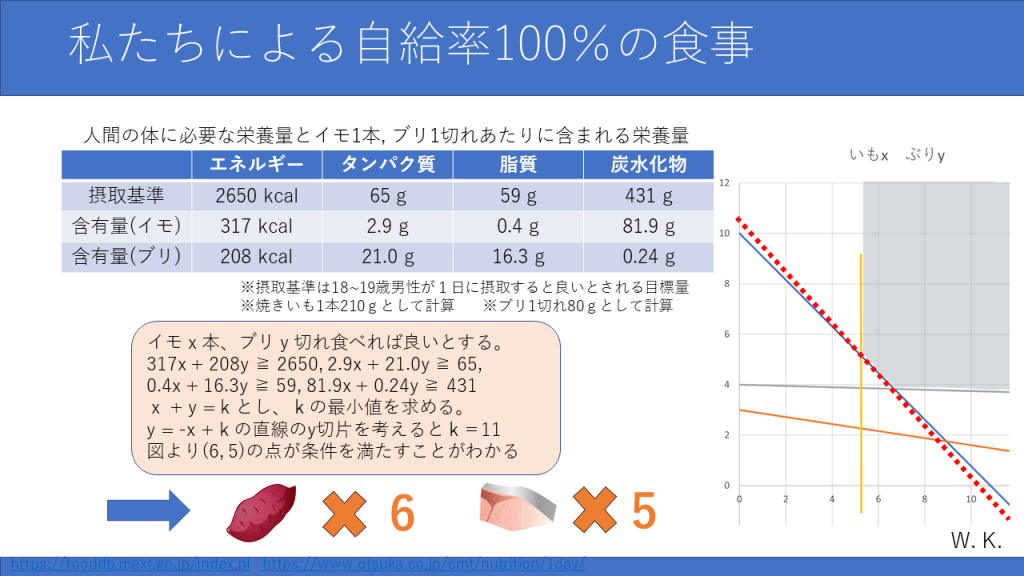
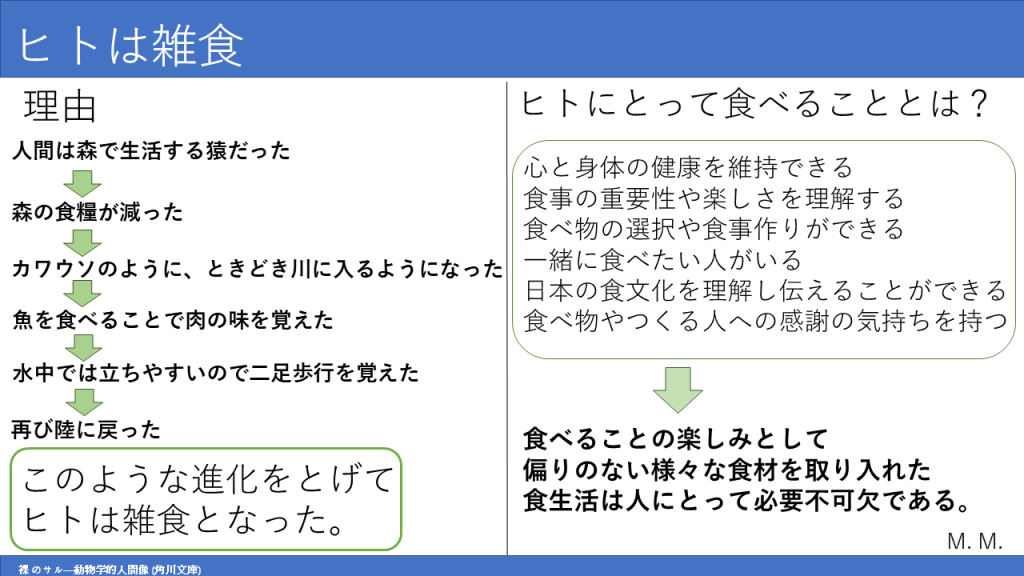


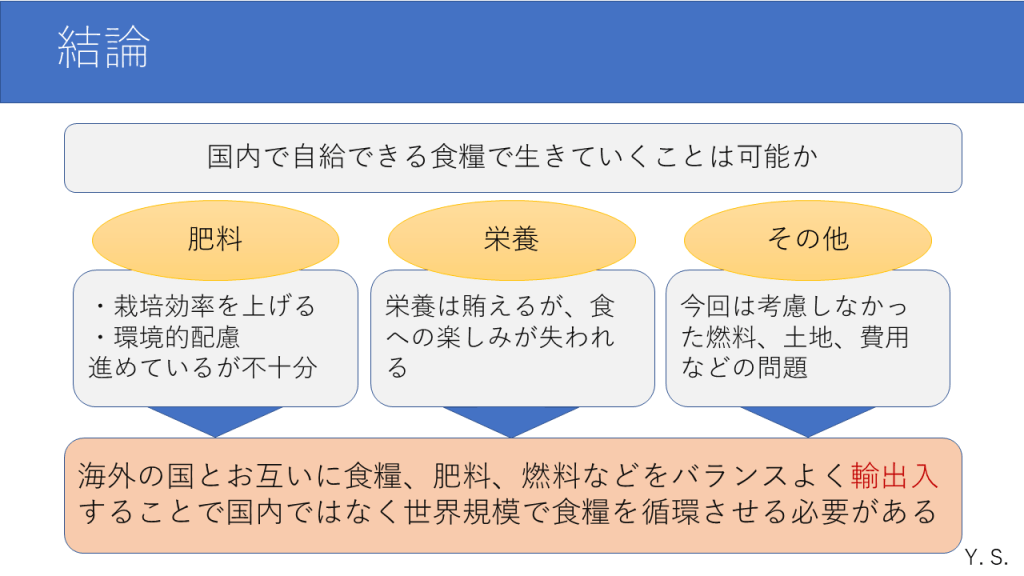
食糧循環とそのマテリアルフロー(最終発表:2023年1月27日・化学物理工学科・1年生 Members: T. A., Y. Y., M. M., Y. M., Y. S., W. K., S. E.)
授業が始まる時の提案
化学物理工学基礎プロジェクト演習 :2022年10月〜2023年2月
「マテリアル・フローから循環型社会を考える」Thinking about a Sustainable Society from a Material Flow Perspective.
食料生産とその物流に影響を及ぼす異常気象やパンデミックのなか、小麦生産大国での戦争もあり食料の価格高騰が続いている。国内では家畜のエサとなる穀物の価格も高騰、主な(無機物)肥料はほぼ全量を輸入に依存する状況、日本の食料自給率の低下、野菜などの種子の外国依存、などの現状をふまえ、必要な食料はどう確保するか?物理・化学・生物を学ぶ者として何をすべきか、「食」の未来について対策の提案を試みる。Websiteで議論の結果を公開することも考えている。
Lenggoro研究室は、食料関連の国家プロジェクト「ムーンショット」(2021-2031)に参画しています。これまで「食」とその関連の活動:empatlab.net/tag/food/
In the presence of extreme weather and pandemics that affect food production and its distribution, food prices continue to increase, partially because of war in the major wheat producing countries. Given the rising prices of grains used as food for livestock in Japan, the dependence on imports for almost all of the main (inorganic) fertilizers, Japan’s declining food self-sufficiency and the dependence on foreign countries for vegetable seeds and so on, how do the country secure the necessary food? We will try to find out what we need to do as learners of physics, chemistry, and biology, and try to propose strategies for the future of food. We are also considering posting the results of our discussions in a website.
Another example of the final result from this project-type class (by 3rd grade students) 2011年度の資料:当時3年生のグループが行った最終発表(テーマ:電子機器の素材から省エネと省資源化を考える) Thinking energy-saving and resources-saving through materials used in electronics.
 "Particles & Transfer" Lab. 粒子・移動現象研究室