From Nanoparticle Transport Research to Academic Leadership 卒業生の歩み:ナノ粒子輸送研究から学術リーダーへ. Prof. Kusdianto’s Journey from TUAT to Full Professor クスディアント教授が示す「研究を通じた学び」の力
2026年8月20日、レンゴロ研究室の卒業生であるクスディアント氏が、2014年9月の博士課程修了以来、約12年ぶりに研究室を訪問されました。2011年から2014年にかけて自身が実験を行った研究室や装置を見ながら、当時を振り返る機会となりました。しかし話題の中心は研究そのものではなく、高等教育、国際連携、人材育成、そしてアジアにおける大学の将来像についてでした。
On August 20, 2026, Prof. Kusdianto returned to EMPAT Lab, visiting the laboratory where he conducted all of his Ph.D. experiments between 2011 and 2014. More than a decade had passed since his graduation. As we walked through the laboratory and reflected on old experiments, our conversation quickly moved beyond research topics. We spent several hours discussing higher education, international collaboration, student development, and the evolving role of universities in Asia.
The visit reminded me that the long-term value of graduate education is often much broader than a research topic, a thesis, or even a publication list.
その対話を通して改めて感じたのは、大学院教育の価値は、研究テーマや論文数だけでは測れない ということです。
Building a Foundation 基盤を築いた学生時代
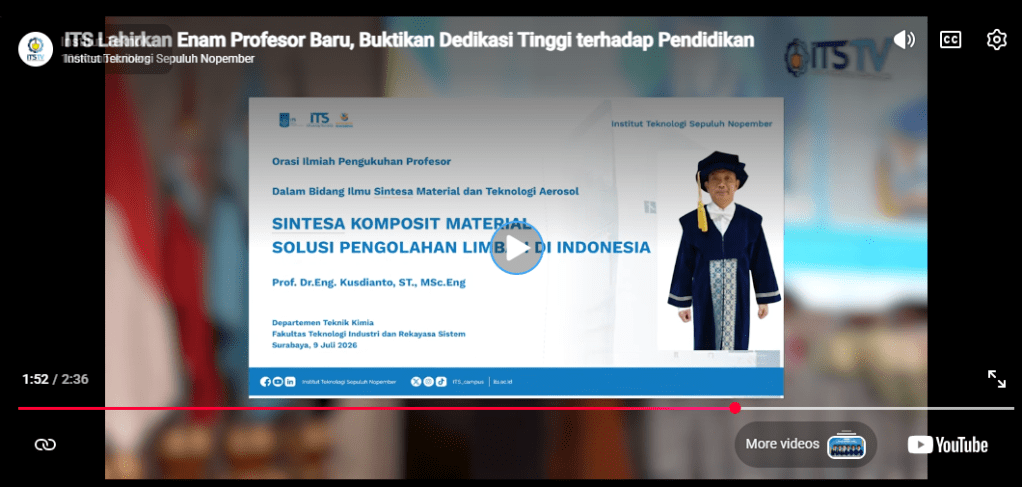
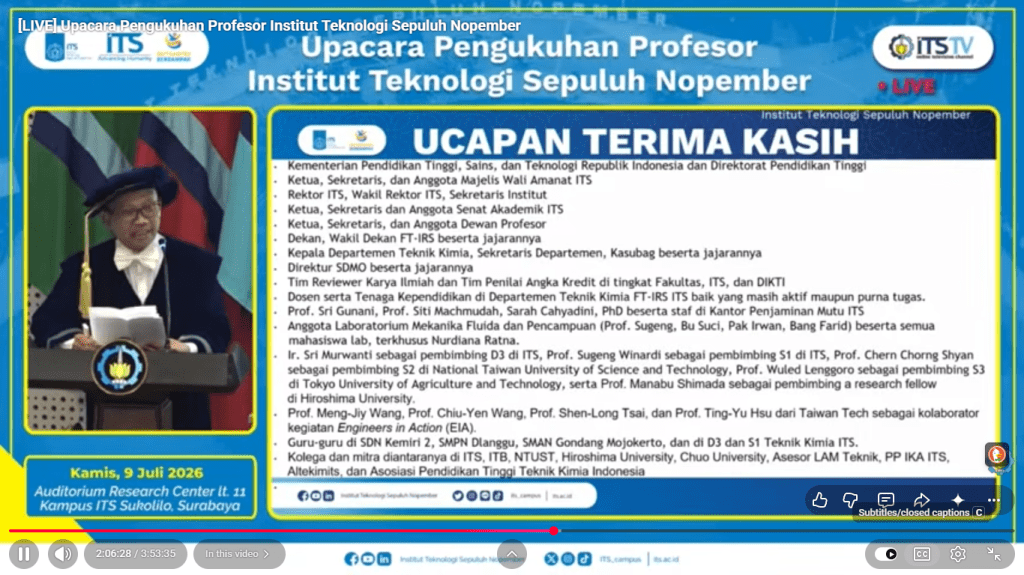
Prof. Kusdianto received his B.E. in Chemical Engineering from Institut Teknologi Sepuluh Nopember (ITS), Indonesia, in 2002. After several years in industry as a Quality Assurance Supervisor, he earned his M.E. from National Taiwan University of Science and Technology before joining EMPAT Lab at Tokyo University of Agriculture and Technology (TUAT) as a doctoral student.
クスディアント教授は、2002年にインドネシア・セプル・ノペンバー工科大学(ITS)化学工学科を卒業後、民間企業で品質保証業務に従事しました。その後、台湾・国立台湾科技大学で修士号を取得し、2011年に東京農工大学レンゴロ研究室へ博士課程学生として入学しました。
Unlike many researchers whose careers focus primarily on particle synthesis, his doctoral work at TUAT explored a different aspect of particle engineering: 現在の専門はナノ材料や環境プロセス工学ですが、博士課程で取り組んでいた研究は少し異なるものでした。
How nanoparticles move, interact with surfaces, and can be transported or immobilized within complex structures.
His Ph.D. research included topics such as:
- aerosol transport and deposition, エアロゾル中の微粒子輸送
- particle immobilization within porous materials, 粒子の表面堆積現象
- electrophoresis (in water) for nanoparticle fixation, 電気泳動による水中ナノ粒子の固定化
- particle placement in engineered honeycomb structures. 多孔質構造内部への粒子導入
つまり、粒子を「作る」のではなく、粒子を「運ぶ」「配置する」「固定する」研究 でした。
One representative study was: 代表的な論文の一つが、
Insertion of Presynthesized Particles in the Pores of a Honeycomb Structure by an Aerosol Process (2014).
At the time, the work focused on engineered porous materials. Looking back today, however, it raises fascinating questions related to biological systems: この研究では人工的なハニカム構造内部への粒子導入を対象としていました。しかし現在振り返ると、
- How do particles enter natural porous structures? 粒子サイズと孔径の関係
- What controls penetration into pores? 粒子の侵入深さ
- How does particle size compare with pore size? 生体組織における輸送
- Can structures such as plant stomata inspire future immobilization technologies? 植物の気孔(数 µm オーダー)との比較
など、新たな視点から見直すことができます。
当時は工学的な多孔質材料を対象としていた研究が、現在では生物システムや自然界から学ぶ新しい技術へとつながる可能性を持っているように思えます。This is a good example of how research findings often gain new meaning many years after they were first published.
More Than Research 研究だけではないリーダーシップ
What I did not fully realize during his Ph.D. years was the extent of his leadership activities outside the laboratory. While conducting his doctoral research, Prof. Kusdianto also served as the Chairman of PPI TUAT, the Indonesian Student Association at TUAT.
今回の訪問で初めて知ったことがあります。クスディアント教授は博士課程在学中、研究活動と並行して、PPI TUAT(東京農工大学インドネシア人留学生会)の会長も務めていました。
Balancing research, international student activities, and community leadership required considerable commitment and organizational skill. Looking back, these experiences may have contributed significantly to his later development as an academic leader. 博士研究だけでも大変な時期に、留学生コミュニティの運営や企画を担っていたことになります。振り返ってみると、こうした経験は研究業績には直接現れません。
Graduate education is often viewed as training for research. However, leadership, communication, and the ability to build communities are equally important skills for future professors.
しかし、
・人をまとめる力
・組織を運営する力
・異文化間で協働する力
・自ら機会を創り出す力
といった、後に大学教員として必要となる重要な能力を養う機会だったのではないかと思います。
Returning Home and Expanding Horizons 研究テーマは変わる
After receiving his Ph.D. in 2014, Prof. Kusdianto returned to Indonesia and gradually expanded his research beyond his original doctoral topic. 2014年に帰国してからのクスディアント教授の研究は大きく発展しました。
His work has evolved into diverse fields including:
- ZnO- and TiO₂-based nanomaterials, ZnO・TiO₂系ナノ材料
- photocatalysis, 光触媒
- water-treatment technologies, 水処理技術
- environmental remediation, 環境浄化
- carbon capture and utilization, 炭素固定
- biogas upgrading, バイオガス高度利用
- battery cooling systems, バッテリー冷却
- CFD modelling and reactor engineering. CFD(熱流体)解析
など、多岐にわたる研究を展開しています。しかし、その根底には常に Although the individual research topics changed, the underlying principles remained the same:
transport phenomena, particle behavior, and chemical engineering thinking.
輸送現象, 粒子挙動, 化学工学的思考
があります。研究テーマは変わっても、博士課程で培った基盤は変わっていません。
Building Programs, Not Only Papers 論文だけでなく、人と仕組みをつくる
One particularly impressive aspect of his career is that he has not focused solely on journal publications.
Since returning to Indonesia, he has contributed to the development of pilot-scale technologies and practical engineering systems addressing regional challenges, particularly in water and environmental applications.
In addition, he has become actively involved in international education.
Over the past several years, he has hosted more than ten visiting students from Taiwan and helped build academic links between institutions in Indonesia and Taiwan. These efforts have been recognized internationally, and he has recently been invited to Taiwan to share his experiences in developing such programs.
現在のクスディアント氏の活動で印象的なのは、論文発表だけではありません。東ジャワ地域では、水処理などの環境技術に関する実証的な取り組みに関与し、研究成果を社会へ実装する活動も進めています。
さらに近年は、台湾からの学生受入れプログラムのホストとして活躍し、これまで10名以上の学生を受け入れてきました。こうした活動が評価され、来年には台湾政府の支援により台北で講演する予定だそうです。
これは単なる国際交流ではありません。
This highlights a form of academic impact that is sometimes overlooked:
Research builds knowledge.研究は知識を生み出す。
Education builds people. 教育は人を育てる。
International collaboration builds bridges between societies. 国際交流は社会と社会をつなぐ。
その三つを体現しているように感じます。
A Message for Current Students 現在の学生へのメッセージ
クスディアント教授がレンゴロ研究室で過ごした期間は、わずか3年間でした。Dr. Kusdianto spent only three years in EMPAT Lab. Three years is not a long time.
また当研究室では、多くの博士課程学生が、自ら実験を計画し、自らデータを取得し、自ら論文を書くことを基本としています。これは決して効率の良い方法ではありません。大規模プロジェクトの一部として分業した方が、多くの論文を書くことができるかもしれません。Like many doctoral students in our laboratory, he largely generated the experimental data for his publications himself. This research style can be demanding and may produce fewer publications compared with highly segmented team-based projects.
However, it develops something different: しかし、その代わりに得られるものがあります。
- ownership of the research, 研究への責任感
- independence, 自立性
- resilience, 粘り強さ
- confidence in entering unfamiliar areas, 新しい分野へ踏み出す勇気
- and the ability to create new opportunities. 自ら機会を創る力
Looking at his career today, it is difficult to argue that the value of his doctoral education can be measured only by the papers published during those three years.
Research as a Learning Process 研究を通じた学び
クスディアント教授の歩みは、レンゴロ研究室が大切にしてきた考え方を改めて示しているように思えます。Prof. Kusdianto’s career reinforces one of the central ideas of EMPAT Lab:
A research topic does not define a career. 研究テーマはキャリアを決めない。
From nanoparticle transport to environmental technologies. ナノ粒子輸送研究から環境技術へ。
From a doctoral student at TUAT to a Full Professor in Indonesia. 博士課程の学生から大学教授へ。
From conducting experiments individually in a laboratory to leading students, research programs, and international collaborations. 研究者から教育者へ。そして、国際的な人材交流を支えるリーダーへ。
The common thread is not a specific research topic. It is the ability to continue learning, adapting, and creating new opportunities throughout one’s career. その共通点は、特定の研究テーマではありません。学び続ける力、未知の課題に挑む力、新しい機会を創り出す力です。
Closing Reflection 訪問を振り返って
Prof. Kusdianto’s visit reminded me of something that is often forgotten in academia: 今回の再会を通じて改めて感じたことがあります。
The most important outcome of a Ph.D. may not be the thesis itself. It may be the person that the student becomes ten or twenty years later.
博士課程の最も重要な成果は、論文ではないのかもしれません。10年後、20年後にその学生がどのような人になっているか。
And that, perhaps, is one of the most meaningful ways to evaluate graduate education. それこそが大学院教育の本当の成果なのかもしれません。
(W. Lenggoro, 2026/8/21, Tokyo)
Dr. Kusdianto’s publications with TUAT (2014-2020).
- Deposition of ultrasonic nebulized aerosols onto a hydrophilic surface
K Kusdianto, M Gen, M Wada, S Winardi, IW Lenggoro
Malaysian Journal of Fundamental and Applied Sciences 16 (3), 258-263, 2020 - Preliminary Study on the Measurement of the Electrostatic Charging State of PM2.5 Collected on Filter Media
T Okuda*, T Yoshida, Y Gunji, S Okahisa, K Kusdianto, M Gen, S Sato, I. W. Lenggoro
Asian Journal of Atmospheric Environment 9 (2), 137-145, 2015 - Immobilization of colloidal particles into sub-100 nm porous structures by electrophoretic methods in aqueous media
K Kusdianto, MN Naim, K Sasaki, IW Lenggoro
Colloids and Surfaces A: Physicochemical and Engineering Aspects 459, 142-150, 2014 - Short Communication – Insertion of presynthesized particles in the pores of a honeycomb structure by an aerosol process (in Japanese)
K Kusdianto, M Gen, M Tsukada, IW Lenggoro
Journal of the Society of Powder Technology Japan 51 (11), 759-764, 2014 - Area-selective deposition of charged particles derived from colloidal aerosol droplets on a surface with different hydrophilic levels
K Kusdianto, M Gen, IW Lenggoro
Journal of Aerosol Science 78, 83-96, 2014

