https://www.scopus.com/authid/detail.uri?authorId=58512330300
2026/1/24: SciVal トピック分析に基づく研究ポートフォリオの可視化
SciVal による最近のトピック分析から、私たちの研究チームが多様な領域にわたって国際的な学術貢献を行っていることが示されています。SciVal の「トピック(Topic)」は、引用関係にもとづき自動的に形成される研究領域のクラスタであり、研究活動の特徴や強みを俯瞰するための指標として利用できます。
今回の分析では、以下のような代表的トピックが抽出されました:
- 農業生産性向上に向けたナノ粒子利用(Nanoparticles in Enhancing Agricultural Productivity)
- セルロースナノ結晶による高機能複合材料(Cellulose Nanocrystals in Advanced Composite Materials)
- 電気流体力学(EHD)を用いたナノ粒子生成(Electrohydrodynamic Techniques for Nanoparticle Fabrication)
- 都市緑地と大気汚染の関係(Urban Green Spaces and Air Pollution Mitigation)
- 飛沫蒸発・粒子自己組織化ダイナミクス(Dynamics of Droplet Evaporation and Nanoparticle Assembly)
- メガソニック洗浄、気泡キャビテーション、粒子除去(Megasonic Techniques, Cavitation Effects)
- シルク・セルロース由来材料の水処理・環境応用(Nanocellulose Membranes, Biomolecular Detection)
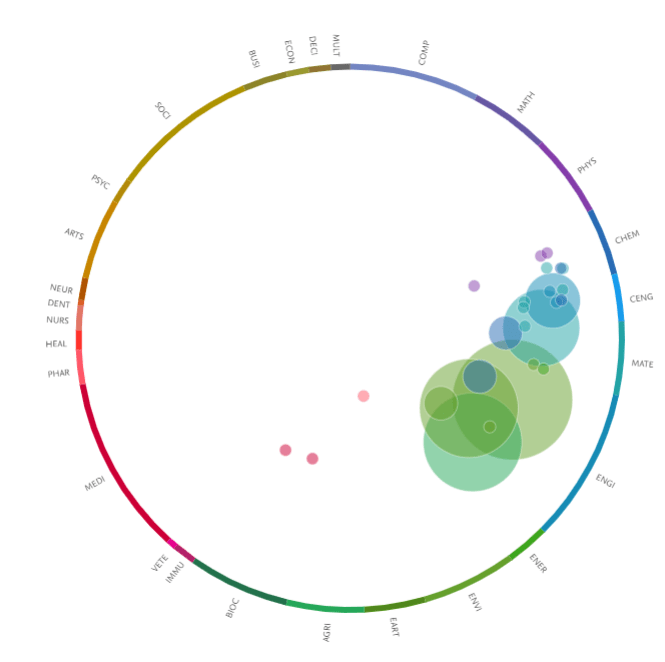
これらは近年の私たちの論文テーマと一致しており、材料科学、ナノ粒子工学、環境エンジニアリング、バイオ材料といった学際領域を横断しています。
本分析は、研究室の強みを客観的に示すと同時に、今後の学生指導・国際連携・研究領域の戦略的展開に役立つものです。
Visualizing Our Research Portfolio through SciVal Topic Analysis
A recent SciVal topic analysis highlights the breadth of intellectual contributions made by our research group across multiple scientific domains. SciVal “Topics” are clusters of publications linked by citation patterns, representing coherent areas of research activity. They help identify strengths, emerging fields, and potential strategic directions.
Our portfolio spans a wide range of topics, including:
- Nanoparticles for enhancing agricultural productivity
- Cellulose nanocrystals and advanced composite materials
- Electrohydrodynamic (EHD) techniques for nanoparticle fabrication
- Urban green spaces and air pollution mitigation
- Droplet evaporation and nanoparticle self-assembly
- Megasonic cleaning and cavitation phenomena on material surfaces
- Nanocellulose and silk-based materials for environmental applications
These topics correspond well to our recent publications and ongoing projects.
Together, these results illustrate the interdisciplinary nature of our research, spanning materials science, nanoparticle engineering, biopolymer processing, and environmental systems. The SciVal analysis provides a data-driven perspective that supports future planning for student supervision, international collaboration, and the strategic growth of our research themes.
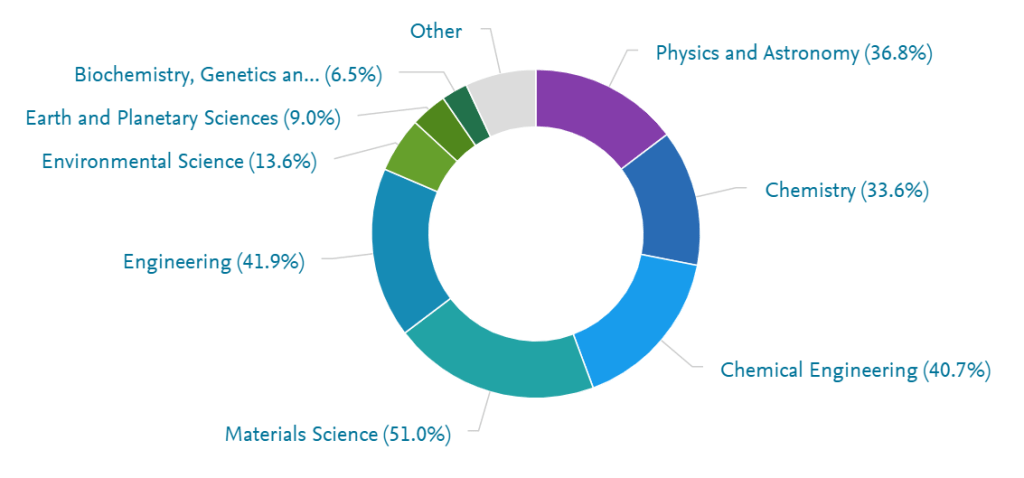
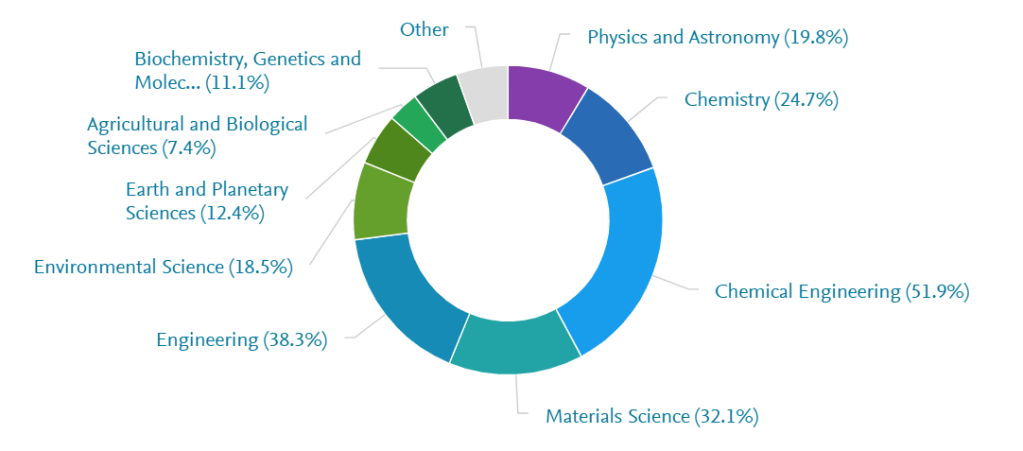
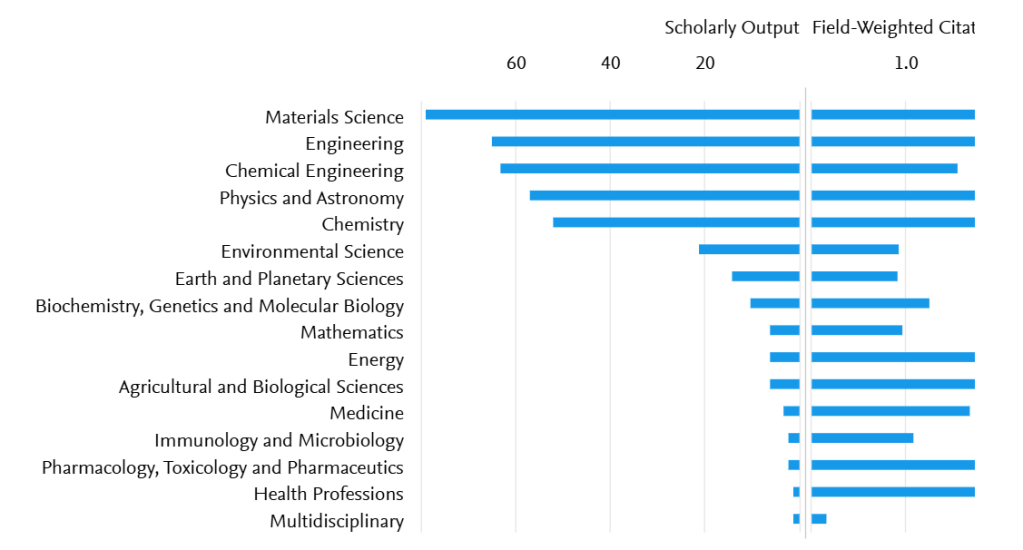
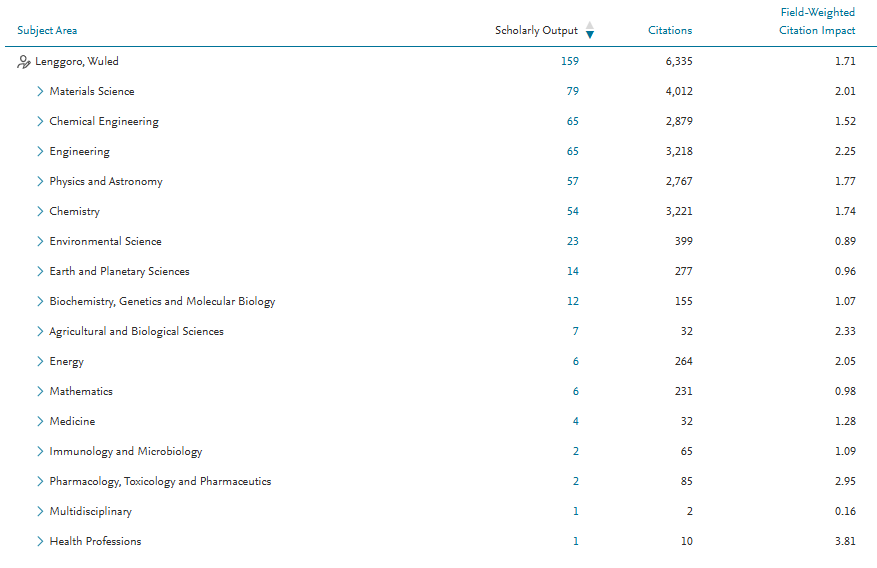
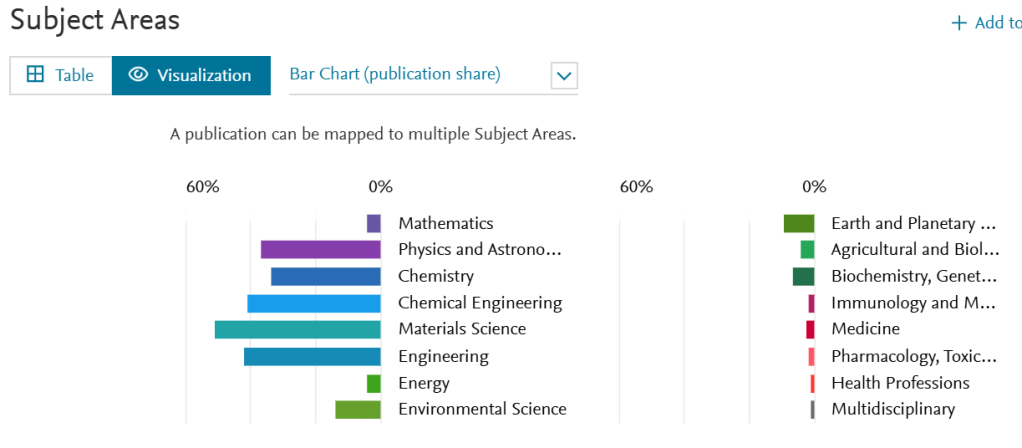
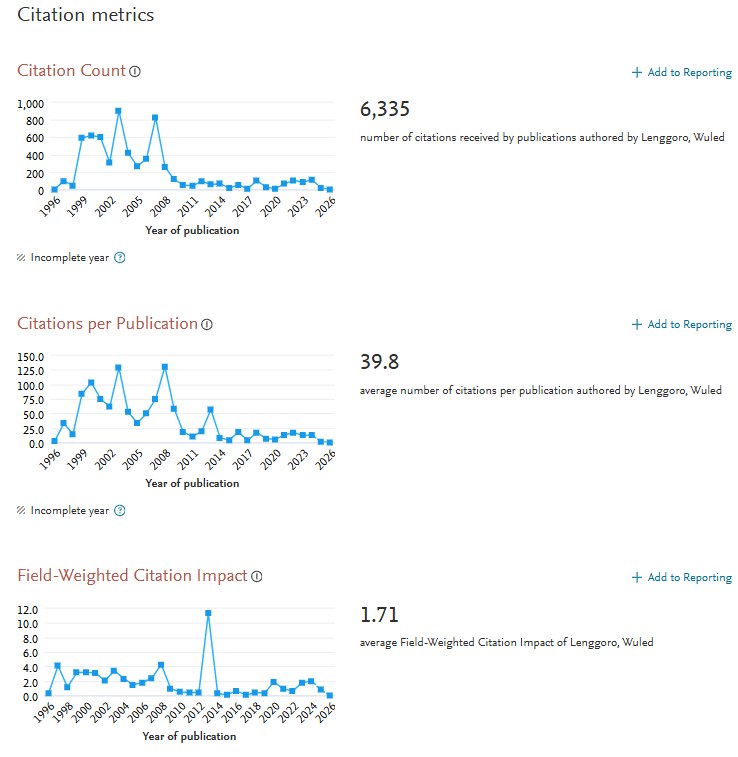
Subject Areas 1996-2026/1
| Subject Area | Scholarly Output | Citations | Field-Weighted Citation Impact |
|---|---|---|---|
| 155 | 6,320 | 1.74 | |
| Materials Science | 79 | 4,007 | 2.01 |
| Engineering | 65 | 3,217 | 2.25 |
| Chemical Engineering | 63 | 2,872 | 1.56 |
| Physics and Astronomy | 57 | 2,766 | 1.76 |
| Chemistry | 52 | 3,217 | 1.80 |
| Environmental Science | 21 | 397 | 0.93 |
| Earth and Planetary Sciences | 14 | 276 | 0.92 |
| Biochemistry, Genetics and Molecular Biology | 10 | 151 | 1.27 |
| Agricultural and Biological Sciences | 6 | 30 | 2.52 |
| Energy | 6 | 263 | 1.98 |
| Mathematics | 6 | 231 | 0.98 |
| Medicine | 3 | 32 | 1.69 |
| Immunology and Microbiology | 2 | 65 | 1.09 |
| Pharmacology, Toxicology and Pharmaceutics | 2 | 82 | 2.82 |
| Multidisciplinary | 1 | 2 | 0.16 |
| Health Professions | 1 | 10 | 3.78 |
 "Particles & Transfer" Lab.