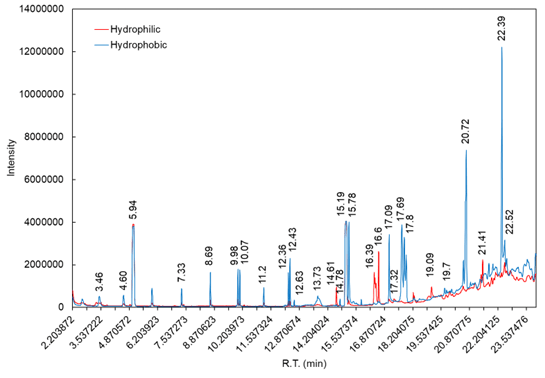
研究室で開発したキャンドル燃焼から得られる新規ナノ材料であるキャンドル煤粒子コロイド (CSC) がトマト (Solanum lycopersicum) 種子の発芽と幼苗活性に与える影響を調べました。CSC を異なる濃度と疎水性(親水性)レベルでトマト種子に処理し、発芽率、幼苗の長さ、生体重、乾体重、クロロフィル、カロテノイドなどの指標を測定しました。その結果、CSC は対照区と比較して発芽速度、幼苗の長さ、生体重を有意に改善することが明らかになりました。また、種子表面にある毛状突起 (トリューム) に煤粒子が付着して種子の水分保持を助けている可能性が観察されました。ガスクロマトグラフィー-飛行時間質量分析法を用いて煤粒子の化学組成を分析した結果、親水性と疎水性の煤粒子サンプルで、種子発芽に影響を及ぼす可能性のある2つの異なる化学成分が特定されました。本研究は、CSC が植物成長促進剤として新たな可能性を秘めていること、ナノ材料が植物の生理生化学に及ぼす影響に関する知見を示唆するものです。
The effect of candle soot colloids, a novel nanomaterial from candle combustion that we developed previously, on tomato (Solanum lycopersicum) seed germination and seedling vigor was investigated. Candle soot colloids were applied at different concentrations and hydrophobicities to tomato seeds and germination parameters and seedling vigor characteristics, such as length, fresh weight, dry weight, chlorophyll, and carotenoids, were measured. It was found that candle soot colloids significantly improved germination speed, seedling length, and seedling fresh weight compared to the control. The adherence of soot particles to the trichomes on the seed surface, which may help seeds retain moisture and stay hydrated, was observed. The chemical composition of the soot samples was analyzed using gas chromatography-time of flight mass spectrometry and two different chemical constituents in hydrophilic and hydrophobic soot samples that may affect seed germination were identified. A new potential use of candle soot colloids as plant growth-promoting agents and insights into the effects of nanomaterials on plant physiology and biochemistry were revealed by this study.
Candle Soot Colloids Enhance Tomato (Solanum lycopersicum) Seed Germination and Seedling Quality ロウソク煤コロイドはトマト種子の発芽と苗の品質を高める
Discover Agriculture (A new journal from Springer Nature) open access doi.org/10.1007/s44279-024-00011-8
Authors: Anca Awal Sembada, Ryuta Harada, Shinya Maki, Toshiyuki Fukuhara, Takeshi Suzuki, I. Wuled Lenggoro
Division of Chemical Engineering, Graduate School of Engineering, Tokyo University of Agriculture and Technology (TUAT); School of Life Sciences and Technology, Institut Teknologi Bandung (ITB), Indonesia; Department of Science of Technology Innovation, Nagaoka University of Technology, Niigata; Department of Applied Biological Science, Graduate School of Agriculture, TUAT; Graduate School of Bio-Applications and Systems Engineering, TUAT; Department of Applied Physics and Chemical Engineering, Graduate School of Engineering, TUAT
著者:アンチャ・センバダ(農工大・応用化学・博士課程、インドネシア、Bandung工科大・生命科学系)、原田隆大、牧慎也(長岡技術科学大学・技術科学イノベーション専攻) 、福原敏行、鈴木丈詞(農工大・農学研究院)、レンゴロ(農工大・工学研究院・化学物理工学科)
Keywords: carbon, colloidal, nanomaterials, chemical analysis, nanoparticles, seedling growth
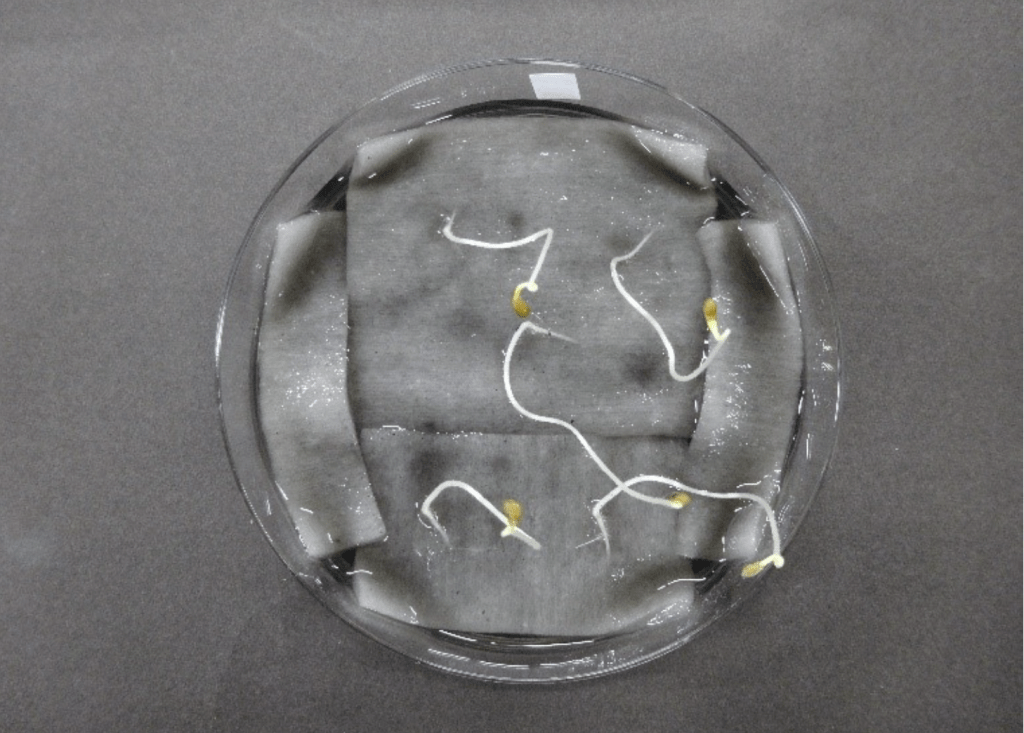
Photograph of seedlings (Day-8)
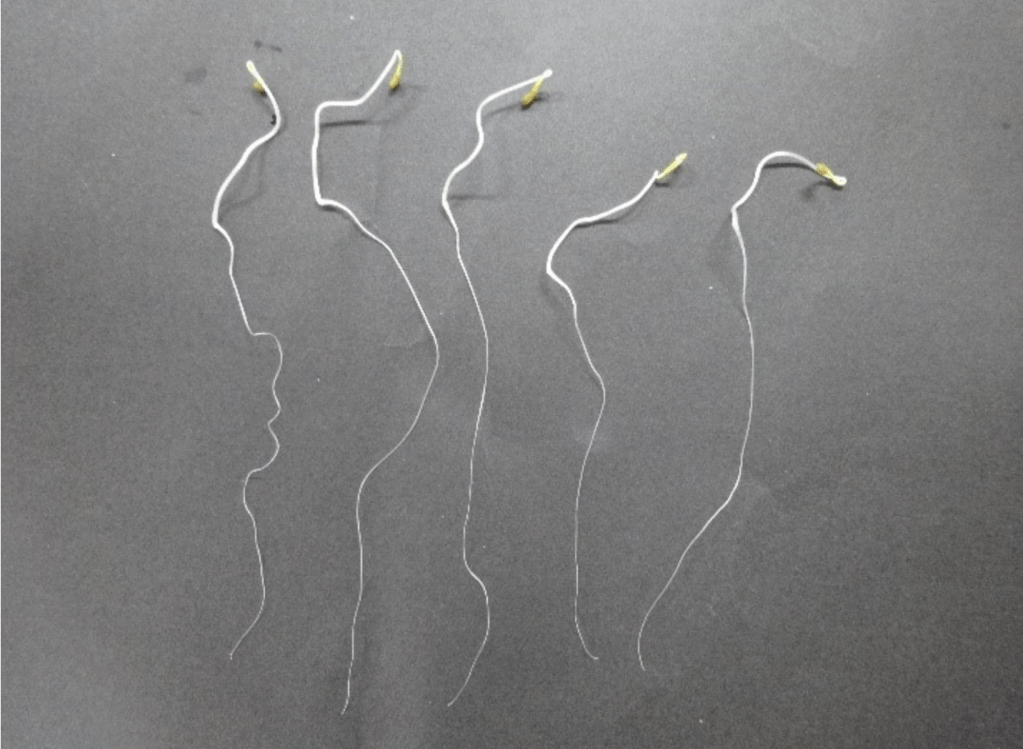
Photograph of seedlings (Day-8, after harvested) 実生の写真 (8日目、収穫後)
Shortlink of this website: https://wp.me/p10HOa-6dj
 "Particles & Transfer" Lab. 粒子・移動現象研究室