EMPAT Lab : “EMPAT means four in Indonesian — a tribute to the four students who helped start the lab in 2007. It also stands for our commitment to sustainable science: Environment-conscious Particles and Transfer research — and the transfer of knowledge, ideas, and lives.”
MISSION STATEMENT:
Established in 2007 at Tokyo University of Agriculture and Technology (TUAT) as part of Japan’s first tenure-track program, EMPAT Lab investigates transport phenomena across multiple scales — from nanoparticles to environmental systems. We integrate materials science, fluid dynamics, and heat and mass transfer principles to solve real-world problems.
Our research has practical applications across a wide range of fields, including:
- Biosystems and healthcare
- Mineral resources and water management
- Food and agriculture
- Climate and environmental studies
2007年に東京農工大学 に日本初のtenure-trackプログラムとして設立された私たちの研究室は、物質、流れ、伝熱などの輸送プロセスに関わる粒子工学とそのシステムを専門としています。私たちの研究は、生物システム、天然資源、水管理、食料・農業、ヘルスケア、気候研究など、さまざまな分野で実用化されています。
[VISION & DIRECTION] 持続可能な社会の実現に向けて、次世代のイノベーターとなる学生の育成に重点を置いています。「”Good”エンジニアリング」された材料と「”Bad”望まれない」環境(保全)技術の開発プロセスに貢献するため、以下の取り組みを行います。To help realize a sustainable society, we place a strong emphasis on educating the next generation of innovators. We empower students to become future leaders through hands-on research experiences in sustainable technologies and systems.
We contribute to both:
- the development of “engineered” (good) materials
- and strategies for mitigating “unwanted” (bad) environmental impacts
Through the following core activities:
- Analyzing transport phenomena of materials from microscopic to macroscopic scales 物質輸送現象の解析を通じて、ミクロからマクロまでの幅広いスケールでの現象理解を目指します
- Proposing new systems based on research-driven insights 新しい価値観に基づく新システムの提案。
- Exploring strategies to balance diversity in multidisciplinary and multicultural environments多分野・多文化環境における多様性のバランスを取るための戦略の探求。
卒業生の証言 >> Testimonials from alumni >> Essay and Professor’s Opinions
Our primary goal is to establish a dynamic platform for human resource development, empowering students to excel both internationally and interdisciplinarily. We emphasize student growth over research outputs, equipping them to tackle global challenges in sustainable technology and environmental conservation. 研究室の主な目標は、学生が国際的にも学際的にも卓越できるようにするためのダイナミックな人材育成プラットフォームを確立することです。研究プロセスを通じた学生の成長を最重要視し、創造的思考力と課題設定能力(および問題解決能力)の養成に注力します。
Student-Centric Approach We explore how learners from diverse “cultures” (e.g., Engineering with Agriculture, or Japanese with non-Japanese) engage in research and investigate how these interactions can generate meaningful outcomes. 多様な「文化」(例:工学と農学、または日本人と非日本人)から来る学習者がどのように研究に取り組み、これらの相互作用がどのように有意義なアウトカムを生み出すかを探求します。
- 社会人向け、研究室の紹介 (2022-2025) Introduction, published in a society journal etc
- 学生向け、研究室の紹介 (2025/7) Lab Introduction: for students


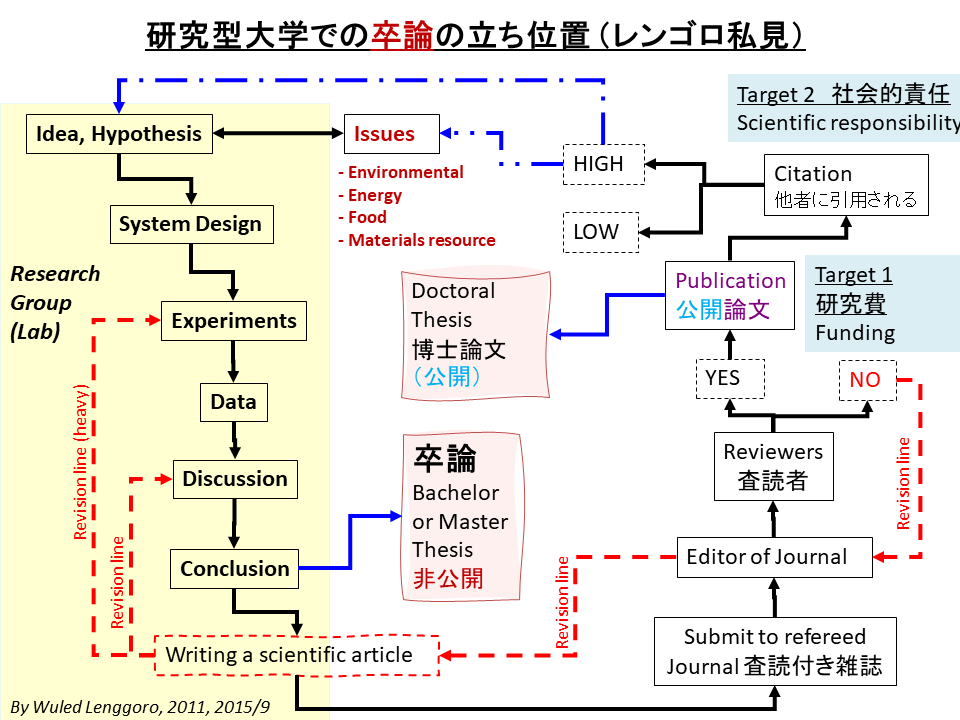
An opinion 大学では学ぶ人が主役。研究を「道具」とすることで、学生が成長するための効果的な学びが得られます。大学は組織的に学生の成長を支援します。研究室は学生が知識・スキル等を自分で生み出すための仕組みを提供するところです。文献や指導教員の助言は大切であるが、あくまでも手がかりに過ぎない。本当に「使える」知識・スキルは、学生自らの直接体験を通して得なければなりません。自転車の乗り方を「学習」するために、転びながら練習することが必要なのと同じです (WL, 2015)。(Other essays)In universities, students are the main actors. By using research as a “tool,” students can gain effective learning for their growth. Universities play a role in supporting student growth in an organized way. Research groups (labs) are where students can create knowledge and skills for themselves. While it is important to have reference materials and advice from supervisors, they are only clues. In order to actually use knowledge and skills, students must acquire them through direct experience. It is the same as practicing while falling down to learn how to ride a bicycle.
Research as a Learning Tool + Cross-cultural Collaboration + Sustainable Technology Development. 多数の自律型人材が集まり、互いに影響を与えることで、複雑な状況においても高度かつ創造的な解決策を導き出していく “A group of self-directed individuals gathers, influencing one another to achieve highly creative and advanced solutions even in complex situations.”
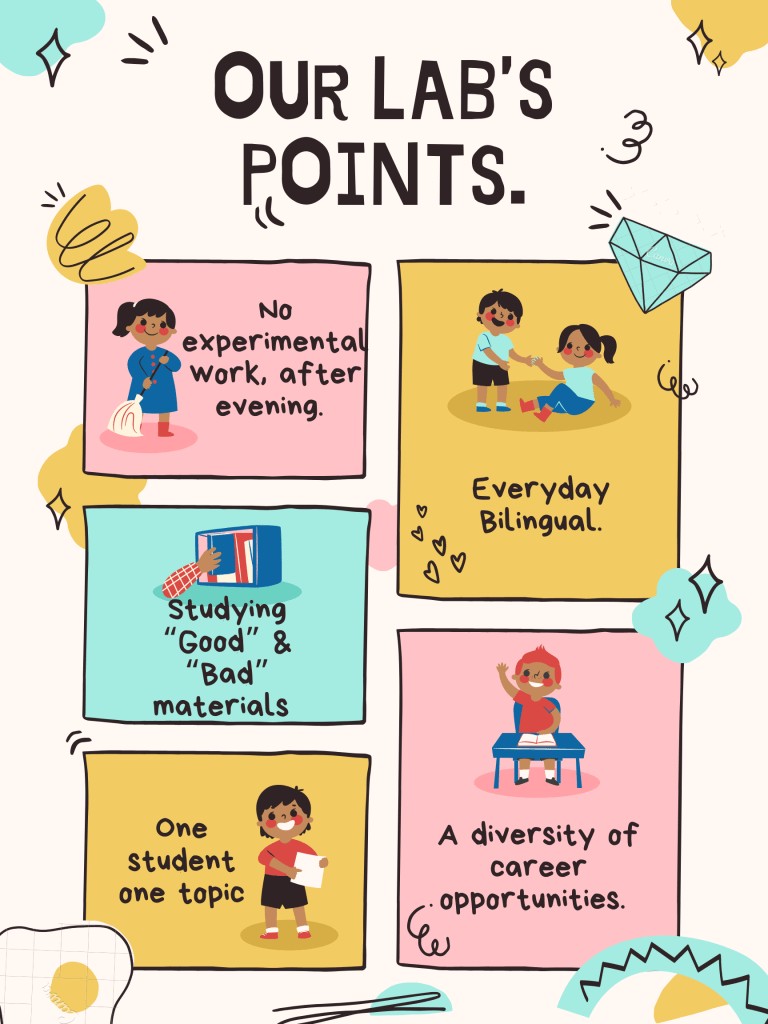
Our lab’s points. 研究室の特徴:
- Studying “Good” & “Bad” materials & processes. 両極からアプローチ
- Engaging Agriculture+Engineering: 大学の特徴を生かせて農工連携も #biosystem, #food
- One student one topic. Each (B/M) student designs their own research theme/proposal 各学生が自分の研究テーマ・提案書を作成
- Especially for B/M students: Focus on process over results. 結果よりもプロセスを重視
- No experimental work, after evening. 夕方になると帰宅を薦めます
- Work-Life balance: No “training camps”. 行事は年に数回のランチ会のみ、合宿等がありません
- Student is an inventor of a patent. 学生も特許の発明者に >> Original technology and Awards
- Student (including undergrad.) is a writer of journal articles. 英語論文を執筆した卒論生と修士課程学生(留学生ではない)がいます
- Bilingual Environment. 常に外国人研究者がいて、毎日英語でコミュニケーション。
- Diverse Membership, from 6+ countries. (元)メンバーの出身国は6ヶ国以上
- A diversity of career opportunities. 就職先は多種多様. No direct correlation between research topic and career.
- Industry partnerships (PhD student) with scholarships. 企業による給付型奨学金
研究室を希望する皆さんへ.. Professor (Google Scholar / ORCID)
More about Bachelor/Master Thesis: 卒論・修士論文の研究について >> Q&A site
【個人指導、個人スペース】Personal guidance, personal space
7〜10日に1回、主に研究の問題点について議論を行います。学生一人一人が個別のテーマに取り組みます。各自が机を持っており、internet接続PC(1人1台、貸し出し制度)を使ってデスクワーク作業ができます。Once 7-10 days, we discuss mainly research problems. Each student will work on an individual topic. Each student has his/her own desk and can use an internet-connected PC (one per student, rental system).
■ 平日には集中して数時間以上(卒論生は3時間以上)の研究活動ができるように調整する必要があります。夕方以降の実験は「原則禁止」。土日祝日は休み。8月と9月の活動は基本的に個人に任せています。On weekdays, students need to make arrangements to have a few hours of research activities. Experiments in the evening or later are “prohibited in principle. Weekends and holidays are “off”closed”; Activities in August and September are basically up to individuals.
【新しい学生にチューター】Mentor(s) to new student
入ったばかりの学生1名に対して、1〜2名の先輩がつき、(研究内容ではなく)time management等について指導を行います。One or two senior students will be assigned to each new student to provide guidance on time management and other issues (but not on the content of the research).
【研究進捗状況の発表会】To enhance presentation capabilities: SEMINAR
- 研究室全員参加で1~2週に1回。約6週間に1回は自分の担当になります。Once every one to two weeks with all lab members participating. About once every 6 weeks a student will be in charge.
- 研究成果等を15分間で報告し、その後約40分の質疑討論。質問するのは学生全員。A 15-minute presentation of research results, followed by 40 minutes of questions and discussion. All students are required to ask questions.
- 要旨と発表スライド・配布資料はin English。卒論生でも英語による質疑応答(ディベート)ができる日本人学生も数名います。Abstracts, presentation slides, and handouts are in English, and several Japanese bachelor students are able to “debate” in English.
- 年に数回、近い分野(工学系または農学系の研究室との合同セミナーもあります。2020年度以降、2カ月に一回は外国の研究室との合同セミナーを開催しています。Several times a year, we also hold joint seminars with laboratories in similar fields (engineering or agriculture), and since FY2020, we have been holding joint seminars with a lab/group in Malaysia.
- 【学内発表】”Closed” presentation, on the campus: Bachelor: Mid-term(9月), Final (2月)Master: Plan, Mid-term, Final (2月); Doctor : Presentation of Plan, Mid-term (in the 2nd year), Pre-exam, Final/open Exam.
学外発表。Open presentation by students: 研究の位置付けを確認する目的で、多くの学生は、在学中に学会等で発表を経験します。卒論生(4年生)でも全国規模の学会に口頭発表した実績があります(化学工学会やセラミックス協会など)。【大学院生の実績】北海道(札幌市)、青森県(八戸市、青森市)、千葉県、静岡県、名古屋市、大阪市、京都市、岡山市、広島県東広島市、福岡県(北九州市、福岡市), China中国(Xian 西安), Taiwan台湾, Korea韓国, Singapore, インドネシア (Bali, Surabaya, Bandung), 米国 (San Fransisco), オーストラリア (Tasmania & Sydney), Franceフランス (Tours), フィリピン (Manila), スペイン (Madrid) >>List of student presentation & Recent List.
研究施設や工場の見学】Visit institutes/ factories: 講義の一環も含めて、これまで、粉体機器メーカー(神奈川県)、東京都渋谷区清掃工場、農学系の都立研究施設(東京都)、電気化学系の工場(神奈川県)、食品系の工場(神奈川県)、材料系の国立の研究所(茨城県)、トイレタリー用品、医薬品の工場と研究施設(千葉県)、慶應義塾大学、植物工場、測機器メーカー(東京)等に行ってきました。
学生主催の旅行 ”Small” trip organized by students : 箱根、熱海、筑波山、富士急ハイランド、吉祥寺の(ランチ)カフェ、インドネシア料理ディナー(目黒)、マレーシア料理ディナー(渋谷)など。
【大学院生の海外派遣】Overseas training supports: 大学院生の在学中の短期海外派遣を推進しています。本人の負担はほぼゼロ。 Malaysia: 2012. マレーシアの国立Putra Malaysia大学へ1ヶ月 (M.G., Doctoral student), 2 months at MJIIT, Univ. Teknologi Malaysia (2019) (T. H. Master student)。 Mexico: 2016. 日本メキシコ政府の戦略的グローバル・パートナーシップ研修。 USA: 2012, 2017. University of California, etc. >> Memo in 2019
過去のイベント Our lab’s previous events
2010-2011 || 2009 || まとめ: 2008 || 2008 || 2007
Our lab’s NEWs: 2010-2011 || 2009 || 2008 || 2007
Where are the alumni? 卒業生の進路
製造メーカー(機械・建設、化学・繊維、食品・医薬品、総合印刷、機器、半導体製造、精密機器等)行政機関、大学教員(博士修了生:化学工学、応用化学(大気化学)、物理学、生命理工学、バイオテクノロジー等)、商社、金融機関、コンサルタント企業等・・・)University, Plant Construction, Chemicals, Governments (Japan, Malaysia), Food, Printing, Instruments, Financial, Consultant,…
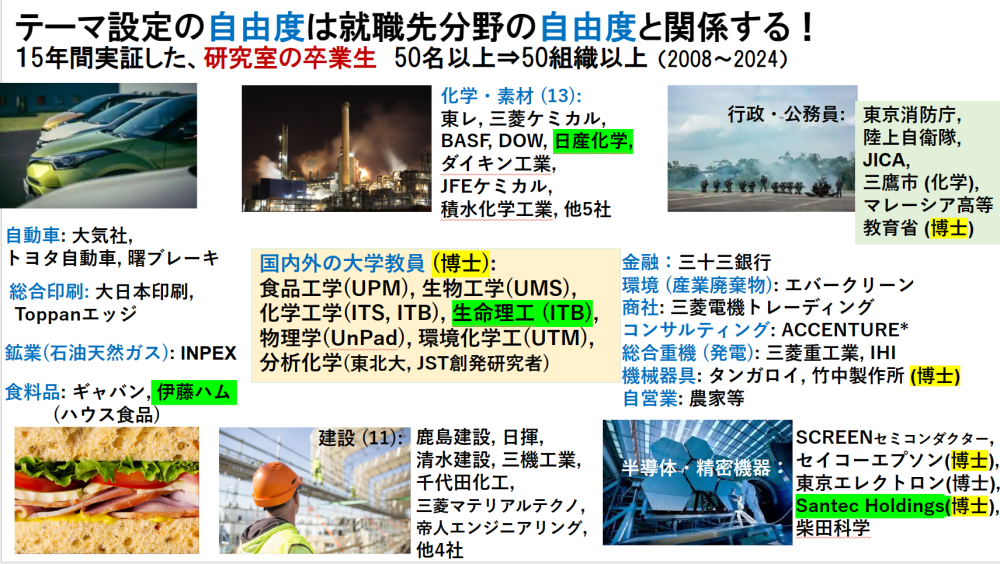
在学中の研究テーマは就職先の業種や仕事内容とほとんど無関係のようです。
■ 卒業生の進路. Alumni, after graduation.
■ 海外からのゲスト, Our guests from abroad and our recent visitors.
Examples of opinions that we were influenced by.
…Rather than only conveying what science has discovered about the natural world, as is done in most countries, a top priority should be to empower all students with the knowledge and practice of how think like a scientist.
…Scientists share a common way of reaching conclusions that is based not only on evidence and logic, but also requires honesty, creativity, and openness to new ideas. The scientific community can thus often work together across cultures, bridging political divides….
…科学者は、証拠と論理だけでなく、正直さ、創造性、新しいアイデアへの開放性を必要とする結論に達する共通の方法を共有しています。したがって、科学界はしばしば「政治的な分断」を橋渡ししながら、文化を超えて協力し合うことができます。
R. Feynman 1. The ultimate goal of education should be to empower individuals to become lifelong learners who can adapt to a rapidly changing world, embrace diversity, and work towards a more just and sustainable future, 教育の究極の目標は、急速に変化する世界に適応し、多様性を受け入れ、より公正で持続可能な未来に向けて働くことができる生涯学習者となる個人に力を与えることであるべきである
R. Feynman 2. You cannot get educated by this self-propagating system in which people study to pass exams, and teach others to pass exams, but nobody knows anything. You learn something by doing it yourself, by asking questions, by thinking, and by experimenting. 試験に合格するために勉強し、試験に合格するために人に教えるが、しかし誰も何も知らないという、この自己増殖システムによって教育を受けることはできないのです。自分でやってみることで、質問してみることで、考えてみることで、実験してみることで、何かを学ぶことができるのです。
• What others think of you is none of your business. • It’s OK not to have all the answers. • Experiment, Fail, Learn and Repeat. • Knowledge comes from experience. • Imagination is important. • Do what interests you the most. • Stay curious 他人があなたについてどう思うかは、気にしないこと。全ての答えを持っていなくても大丈夫です。実験し、失敗し、学び、繰り返しましょう。知識は経験から得られます。想像力は重要です。自分が最も興味を持っていることをやりましょう。好奇心を持ち続けましょう。
- No one knows the right answer, so move faster, fail faster, fix faster.
- When you think about difficult things separately, you can see that some of them are not difficult. Even if you can’t win a gold medal suddenly, you can train for the fixed time every day.
- We’re always looking for information about the future and trying to get as accurate a forecast as possible.
- It’s hard to find : “This will make you more efficient in a short time.” But there are ways to speed up growth: “Choose a difficult road”
- 「イングランドしか知らない人に、イングランドの何がわかるか」。
- キップリングはインド生まれ。母国イギリスを理解したうえで心から愛した。
- (解釈)グローバル化でいくら国境がなくなろうと、人間は生まれ育った環境と社会に強い愛着を持つ。しかし、その愛着は外の世界を知って初めて強く意識され、その結果、健全な愛国心が育まれる。単に日本に生まれ、日本の学校に通い、日本で育っただけでは、日本人にはならない?
- アメリカの教育は「工業的」に画一化を志向しているが、人間はもっと「農業的」有機的存在として教育され成長するべき。
An EPISODE: Apple社を去ったSteve Jobsが(自分も融資した)Pixar社でコンピュータを使った最先端の現場を見た後(1995年頃): 私はその時あらためて思った。大事なのは技術ではなく、それを使って何を生み出すことができるかだ。技術は短期間で廃れるが、生み出された物語は何十年何百年と受け継がれていく。(同じ頃にライバルのWindows95が発売された)
 "Particles & Transfer" Lab. 粒子・移動現象研究室